
Continuous hot-dip galvanizing coats moving steel strip in molten zinc. Electrogalvanizing deposits zinc from an electrolyte using electric current. Compare the specified steel grade, zinc on each face, surface condition and finished-component exposure.
This comparison covers zinc-coated sheet and coil. Batch galvanizing coats fabricated articles after manufacture and needs its own product requirements. Galvannealed sheet, usually identified as GA or ZF, has a zinc-iron coating developed through an additional heating stage. Broader process definitions are covered in what galvanizing involves .
How the coating route changes the product
On a continuous hot-dip line, prepared strip enters a zinc bath; gas wiping controls the liquid coating left on the moving sheet. Cooling and finishing follow. Many lines combine annealing and coating, so the producer qualifies the steel grade together with the line’s thermal cycle.
Electrogalvanizing builds the coating in plating cells. Its deposition stage avoids immersion in molten zinc, allowing the producer to apply zinc to an already prepared substrate. Cleaning, electrical control and line configuration govern the deposit. One-sided and differential coatings are available within the relevant product offering.
Neither route name supplies a steel strength value. Compare the delivered grade and its mechanical-property requirements before comparing coatings. Two sheets with different substrate grades remain different engineering materials even when their zinc masses match.

The differences worth comparing
| Item | Continuous hot dip | Electrogalvanized |
|---|---|---|
| Deposition | Molten-zinc bath followed by coating control and cooling. | Electrolytic zinc deposition on prepared sheet. |
| Coating amount | Read the stated designation, test basis and distribution between faces. | Read the required mass or thickness separately for each face. |
| Appearance | Surface quality, spangle and finishing depend on the ordered product. | Typically a spangle-free surface; final appearance still needs a surface specification. |
| Processing | Qualify forming, joining and painting for the supplied grade and finish. | Qualify the same operations for the supplied coating and surface treatment. |
| Durability evidence | Assess the complete coating and component in the intended exposure. | Use the same exposure, component and failure criteria when comparing. |
Scroll within the table to see all columns →
Read coating quantity on the same basis
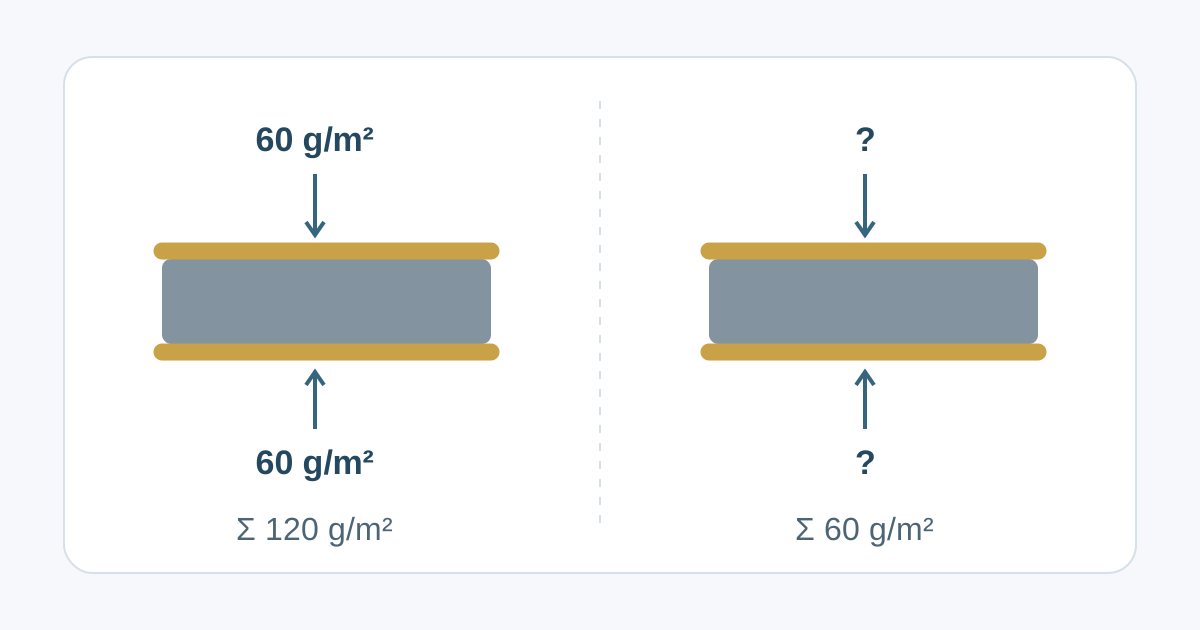
A both-face total and a per-face value describe different quantities. Suppose an illustrative sheet A measures 60 g/m² on its front and 60 g/m² on its back: its combined mass is 120 g/m² per unit sheet area. Sheet B with a combined 60 g/m² has 30 g/m² on each face only if equal distribution has been established. These arithmetic examples are independent of standard coating designations.
Keep nominal thickness, specified minimum mass and measured results in separate columns. In thyssenkrupp’s published table, ZE50/50 corresponds to a nominal 5.0 µm and 36 g/m² on each face. The designation’s numbers therefore need their own definition. The same producer table separately lists a 29 g/m² per-face single-spot minimum for this entry.
Hot-dip designations such as G90 or Z275 have their own standard and sampling context. A triple-spot average, a single-spot minimum and a nominal thickness serve different purposes. For the full designation explanation, use the galvanized coil reference ; for units, use the coating-mass converter .
What a corrosion comparison needs
Both products use zinc to protect steel. A useful comparison records coating mass on the exposed face, surface treatments, paint layers, edges, joints and the wetting conditions of the finished part. The deposition route alone cannot establish service life.
ASTM A879/A879M’s scope includes thin coatings commonly painted and heavier coatings intended for bare service. An assertion that all electrogalvanized sheet is restricted to dry interiors misses that product range. Conversely, a small zinc quantity on an unpainted panel warrants attention even when the panel is called galvanized.
Salt-spray hours, outdoor exposure results and years in service answer different questions. Use a test method and acceptance criterion agreed for the assembly; do not convert a supplier’s test hours directly into calendar years. The galvanized rust explanation distinguishes zinc corrosion products from rust of exposed steel.
Surface, forming and joining
Electrogalvanized sheet is often considered for a uniform painted appearance, while modern hot-dip sheet also serves exposed automotive panels. Specify surface quality and assess the finished painted sample. A photograph of spangle cannot establish coating mass, adhesion or suitability for a visible part.
In forming, substrate ductility, tool geometry, lubrication and coating behavior act together. A trial should include the demanding bend or draw, then inspect the coating and any surface damage. For resistance spot welding, establish an acceptable welding window and electrode-maintenance practice on the actual sheet combination.
Oil, passivation and other treatments influence adhesive bonding and paint preparation. ArcelorMittal explicitly calls for checking treatment compatibility with the user’s bonding and painting processes. Use the galvanized surface-preparation guide when a liquid-paint preparation procedure is needed.
Standards identify separate product routes
ASTM A653/A653M-25a addresses hot-dip zinc and zinc-iron coated sheet in coils and cut lengths. ASTM A879/A879M-22 addresses electrolytic zinc-coated sheet with coating quantity identified by surface. Both were listed as active in the public ASTM catalogue when checked on 12 October 2026.
In the European system, EN 10346 covers continuously hot-dip coated flat products, while EN 10152 addresses electrolytically zinc-coated cold-rolled flat products for cold forming. Their grade, coating and delivery requirements must be read within the specified edition. These references do not establish interchangeable designations between ASTM and EN or apply automatically to batch-galvanized fabricated articles.
Example: a painted control-panel enclosure
Consider an enclosure with a visible painted front and a rear surface that may experience condensation. Both coating routes remain candidates while the design team defines the substrate grade, appearance and exposure requirements.
Compare front and rear zinc quantities separately. Identify whether the rear also receives the full paint system, and examine folded seams, punched openings and cut edges. Then form, join and paint representative samples using the intended production sequence. Review appearance, adhesion and the agreed corrosion performance at those vulnerable details.
This sequence can change the purchase decision: a cheaper coil may need different preparation, more tool cleaning or additional coating on the rear. Compare accepted finished-part cost, including trial and rejection costs, using actual supplier quotations. A universal price ranking between the two processes provides little help.
Checks before substituting one sheet for another
Confirm the substrate grade and thickness basis; named standard and edition; coating on each face and its acceptance basis; surface quality, oil and treatment; forming and joining qualification; and the completed protective system. Preserve coil traceability so the approved sample can be tied to delivered material.
Where the uncertainty is the required amount of zinc, continue with how to choose coating mass . Where the uncertainty is route substitution, obtain approval against the complete component requirements before changing the material callout.
Technical sources and the dated scope check are listed in the sheet-coating comparison references .