
Galvanized steel sheet (GI) carries a zinc-rich coating. Galvannealed sheet (GA) receives additional heating after hot-dip coating, which allows iron from the steel to enter the coating and form a zinc–iron alloy. That change matters during forming, painting and resistance spot welding.
This comparison covers continuously coated sheet and coil. The hot-dip versus electrogalvanized comparison explains the different deposition routes. Batch-coated fabrications and aluminium-containing coating families require separate comparisons.
How GI and GA coatings are formed
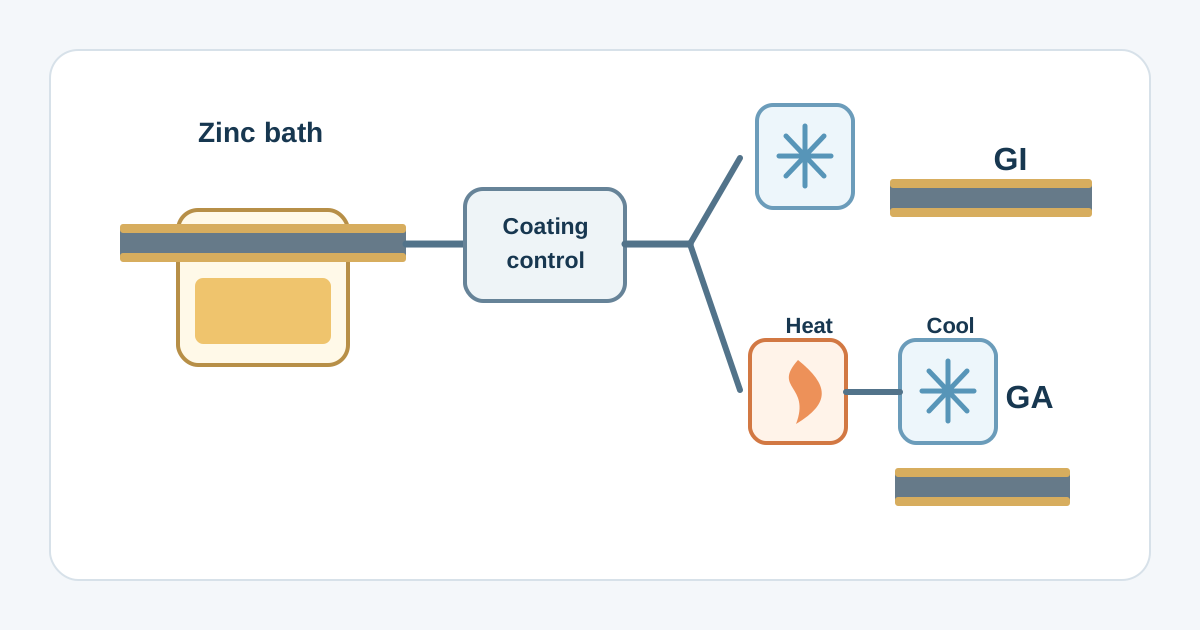
Both products begin with prepared strip passing through a molten-zinc bath. The GI branch continues through coating control and cooling. In the GA branch, an additional heating stage promotes alloying before the strip cools. The process overview in what galvanizing involves provides the broader context.
A thin interfacial layer limits iron–zinc diffusion in GI; galvannealing develops that diffusion reaction. GalvInfo reports typical GA bulk iron content of 9–12%. This is an average through the coating, not a universal delivery limit. The ordered product specification still controls acceptance.
What changes at the surface
A matte surface can be a useful clue when identifying GA. GI appearance also varies with the supplied finish. Check the product certificate and coating designation before deciding which preparation or fabrication procedure to use.
| Question | GI | GA |
|---|---|---|
| Coating family | Zinc-rich | Zinc–iron alloy |
| Additional alloying stage | Coating control and cooling | Post-dip heating before cooling |
| Painting check | Set preparation from the supplied treatment | Confirm cleaning and the complete paint system |
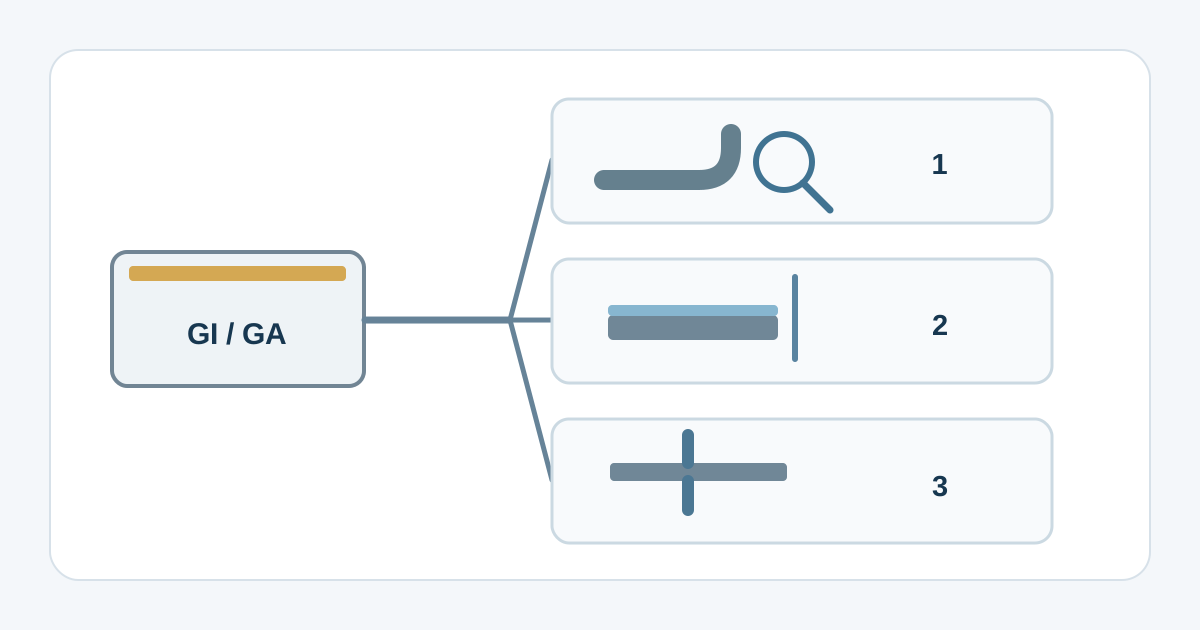
| Forming check | Inspect coating damage and tool pickup | Include powdering assessment |
| Joining check | Qualify the supplied coating and stack | Assess the resistance spot-welding window |
| Corrosion comparison | Record zinc coating and service condition | Distinguish painted and bare exposure |
Scroll within the table to see all columns →
Keep coating properties separate from the steel grade. A harder coating does not assign a higher yield strength to the sheet. For structural calculations or a difficult drawing operation, read the substrate grade and delivered mechanical properties alongside the coating specification.
Reading coating designations and mass
GI and GA identify product families. The complete order needs the governing standard, coating designation and measurement basis. ASTM A653/A653M covers both hot-dip zinc and zinc–iron sheet; the public catalogue lists edition 25a as active. EN 10346 is another relevant product framework. Use the edition required by the contract.
SSAB lists ZF100 as 100 g/m² total over both faces, triple-spot minimum, and approximately 7 µm per face as typical guidance.
Record those as two differently qualified values. The table does not establish a guaranteed 7 µm everywhere. Dividing the total by two also needs a confirmed distribution between faces. Use a coating-specific density and measurement basis for any zinc–iron mass-to-thickness calculation; the pure-zinc converter is insufficient on its own. Broader order fields are explained in the galvanized coil reference .
Paint adhesion and surface preparation
GA is often used for components painted after fabrication. Its surface is favorable for paint adhesion, while the delivered oil or treatment still needs to fit the paint line. ArcelorMittal specifically requires checking treatment compatibility with the user’s painting and bonding processes.
For a painted enclosure, ask the finishing supplier to identify the received surface, cleaning sequence, any pretreatment, primer and topcoat. Have the supplier state the adhesion and corrosion acceptance checks. This avoids accepting a material substitution on the strength of a coating name alone.
The galvanized painting guide covers confirmed GI surfaces. Establish a suitable GA procedure separately; paintability alone does not authorize omitting cleaning or primer.
Forming and coating powdering
GA’s hard alloy coating can shed powder during severe forming, particularly at higher coating loads. This is a coating issue to examine alongside any splits or thinning in the steel itself. A part can meet dimensional requirements and still leave unacceptable residue on the tooling or finished surface.
Use a representative forming trial to assess both outcomes. Record the supplied coating, lubricant, tooling condition and the location of visible damage. If a trial fails, agree the next controlled change. Changing the lubricant and coating together makes it harder to establish why the result improved or deteriorated.
A change from GI to GA on an existing line should include this forming review. Flat-sheet inspection alone leaves the formed coating untested.
Resistance spot welding
GA can offer a wider useful resistance spot-welding range and longer electrode service life than conventional GI. These benefits concern a defined joining process. They do not supply welding settings for a particular assembly.
When comparing samples, keep the sheet grades, thicknesses, stack arrangement and acceptance method documented. Have the welding team establish the usable settings and electrode maintenance interval on that assembly. A qualified GI schedule may need adjustment for GA. Arc, laser and other joining methods need their own qualified procedures. Coated-steel welding also requires an appropriate fume-control assessment.
Corrosion in the finished component
Separate bare exposure from a painted assembly when comparing GI with GA. GalvInfo notes that wet GA can develop reddish corrosion products from iron in the coating. Colour alone is insufficient evidence that the underlying steel is corroding.
A useful comparison states the coating amount, surface treatment, paint system, exposed edges, joints and intended environment. If one sample is painted and the other is bare, the result cannot isolate the effect of alloying. Likewise, changing paint thickness while changing GI to GA tests a combined change.
Agree the failure criterion before testing: appearance, coating adhesion, corrosion at a scribe or penetration of the steel can lead to different judgements. Use the galvanized corrosion explanation for background, then obtain evidence for the actual finished system. Neither GI nor GA has a universal service-life advantage.
What to verify when comparing products
For a proposed substitution, assemble one comparison record:
- The same part drawing and required substrate properties
- The coating identity, designation, mass basis and supplied surface treatment
- The forming trial result, including residue and surface damage
- The confirmed paint system and its acceptance evidence
- The joining procedure and component-level corrosion requirements
An unpainted cabinet and a painted, deep-drawn, spot-welded panel put different demands on the material. Identify the operation or exposure that limits the part, then compare qualified product offers against it. Compare finishing, tool cleaning and rework alongside the purchase price.
Technical sources and the scope of the cited supplier data .