
From wire rod to finished wire
Steel wire is commonly produced by drawing wire rod through dies to reduce its cross-section. Cleaning and lubrication prepare the surface; intermediate treatment may be used between reductions. Final drawing, coating and packaging establish the delivered wire.
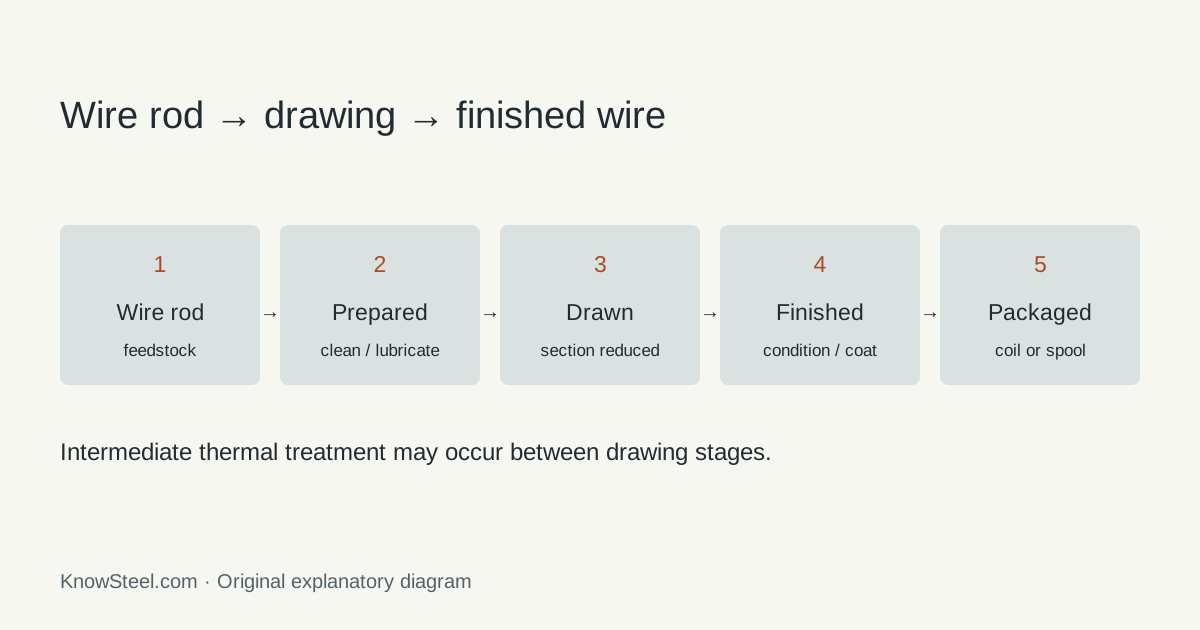
The final condition matters: material softened between drawing stages can be cold worked again before shipment.
Wire rod is the feedstock; finished wire is the product accepted after the ordered drawing, treatment and finishing sequence. Rod chemistry alone cannot certify final wire diameter, tensile condition or surface. Keep the rod heat identity linked through drawing lots and final packages. A split package or changed lubricant must remain identifiable to receiving inspection.
Diameter and tensile condition
Specify diameter, tolerance and out-of-roundness for round wire. Shaped wire needs a section drawing. A tensile requirement belongs with the tested diameter, grade and delivered state; the same diameter can be supplied as soft tying wire or as spring wire with very different requirements.
| Use | Incoming requirement | Later process |
|---|---|---|
| Tying / general forming | Bend response, softness, diameter and surface | Repeated handling and forming to the component shape. |
| Spring wire | Application-specific strength, surface and dimensional requirements | Coiling, treatment and fatigue-sensitive finished-part evaluation. |
| Wire for strands / ropes | Individual wire properties and surface | Assembly construction and testing determine the finished product rating. |
Scroll within the table to see all columns →
ASTM A228/A228M is a music-spring-quality wire specification; it is not the specification for all wire. The A228/A228M public entry identifies music-spring-quality wire; select the contract edition and full diameter-dependent requirements. General forming wire and individual rope/strand wire require their own applicable product specifications. An individual-wire test is not a load rating for the finished rope.
Coating, lubricant and package
A zinc coating, drawing lubricant and temporary oil have different functions. Identify which must be retained or removed before forming, welding or painting. Sheet coating designations such as G90 are not transferred directly to wire; use the wire product’s coating requirements.
A spool or coil must fit the payoff equipment. Record package dimensions, net mass, winding and lot identification. Splicing or splitting packages should preserve the wire’s traceability.
Cast and helix
Cast describes the residual curvature of a released wire loop; helix concerns its departure from a flat loop. Both can affect feeding and coiling. Use the applicable product’s release, measurement and sample-length method when agreeing limits.
A practical acceptance record links diameter measurements, tensile condition, coating/lubricant, package identity and any required cast/helix result to one lot. This keeps an otherwise vague request such as “2 mm steel wire” connected to the actual feed and forming problem.
Read carbon steel , stainless families and annealing for grade and treatment choices; wire-specific mechanical and packaging requirements remain on this page.