
What pickling and oiling do
HRPO means hot-rolled pickled and oiled steel. Pickling removes the oxide scale left by hot rolling. Oiling supplies temporary surface protection and an agreed condition for handling or processing. The product retains its specified hot-rolled grade and dimensional framework.
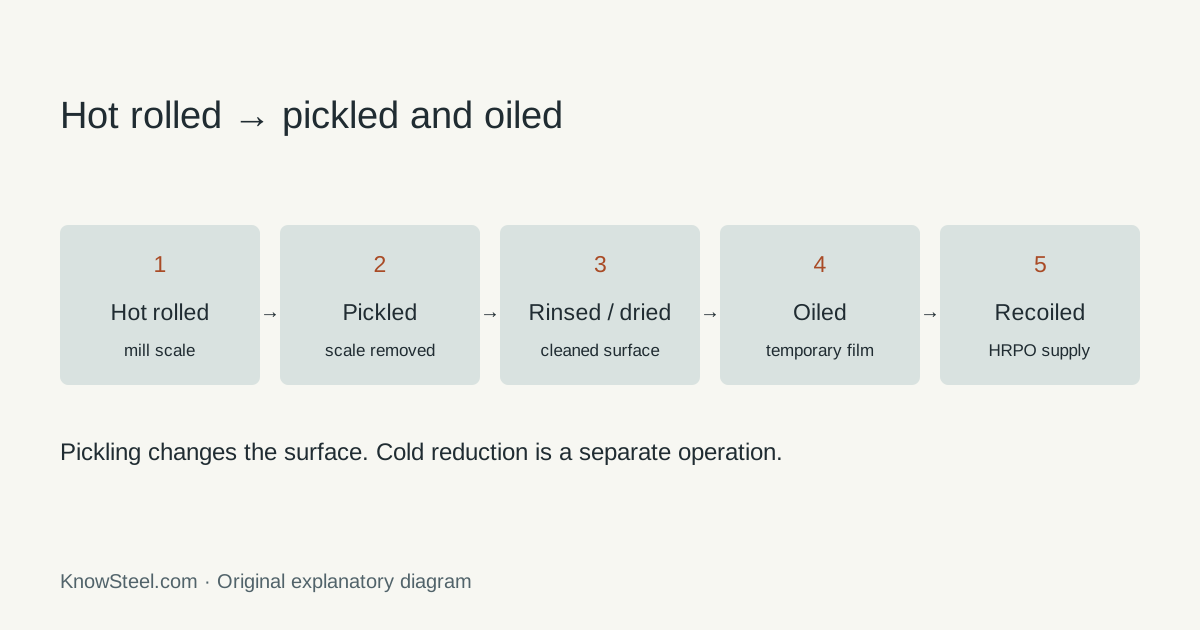
What pickling does not change
Pickling does not automatically change steel grade, perform cold rolling or confer cold-rolled tolerances. Oil is a temporary surface/process condition, not the final corrosion-protection system. Scale removal also does not erase underlying pits, rolled-in defects or other surface damage. Specify those acceptance limits independently of the word “pickled.”
HR, HRPO, cold rolled and galvanized
| Description | What it identifies | What still needs specification |
|---|---|---|
| Hot rolled, with scale | A rolling route and an as-supplied surface context. | Grade, dimensions and preparation for the next process. |
| Pickled and oiled | Scale removal and an oiled surface condition. | Base grade, oil requirements, surface acceptance and storage. |
| Cold rolled | Further reduction through cold rolling. | Annealing or temper, properties, tolerances and finish. |
| Galvanized | A zinc-coated steel product. | Substrate grade, coating designation and relevant product standard. |
Scroll within the table to see all columns →
HRPO can go directly to fabrication or feed a later cold-rolling route. SSAB’s cold-rolled product declaration places pickling before cold reduction in its production sequence.
Surface requirements for the next operation
For a painted enclosure, define residual-scale and visible-mark limits alongside cleaning and pretreatment. For a formed bracket, check the supplied oil’s compatibility with the forming lubricant. Before welding, follow the fabrication process for removing oil and surface residues.
Pickling removes scale; it does not set a new steel grade or a cold-rolled tolerance class. A clean-looking surface can still have a roughness or mark that matters after painting. Separate cleanliness, roughness and appearance requirements.
Oiling and storage
SSAB’s delivery-condition document describes producer oiling options. Name the oil or its required compatibility, packaging and receiving conditions. Pickled dry is a different surface order from pickled and oiled.
Keep water and condensation out of wrapped material. Temporary oil has no universal storage-life promise. On receipt, check the wrap and surface, retain the coil identity and resolve changed surface condition before processing.
Incoming inspection
Check residual scale, roll/handling marks, pitting or other surface damage, oil distribution and contamination. Record condensation, wet packing and storage exposure before the material enters the press or paint line. Link findings to coil identity and agreed acceptance criteria; a descaled bright-looking patch is not proof of uniform surface quality. SSAB’s handling and surface-protection context is producer guidance; the order determines the incoming limits.
Order fields that matter for HRPO
Record grade and product standard, thickness/width tolerances, pickled-surface acceptance, oil condition, edges, coil limits and inspection evidence. If buying cut pieces, add length, squareness and flatness.
For example, changing an oil can matter to the paint line even when the steel grade is unchanged. Changing a grade can matter to the press even when the descaled surface looks the same. Hot-rolled coil covers forming versus structural stock; cold-rolled coil covers the additional reduction and annealing route.