
How galvanizing protects steel
Galvanizing puts zinc on steel. The coating separates steel from the environment, while zinc can corrode preferentially to protect nearby exposed steel at a scratch or cut edge. That sacrificial action consumes coating; drainage, coating quantity and the exposure determine how long useful protection remains.
Batch hot-dip galvanizing
Fabricated articles are cleaned and dipped in molten zinc. The preparation sequence removes grease, rust and scale before fluxing. Flux helps prevent renewed oxidation before immersion. During dipping, iron and zinc react to form bonded coating layers; withdrawal, cooling and inspection finish the article. The American Galvanizers Association explains the degreasing, pickling and fluxing stages.
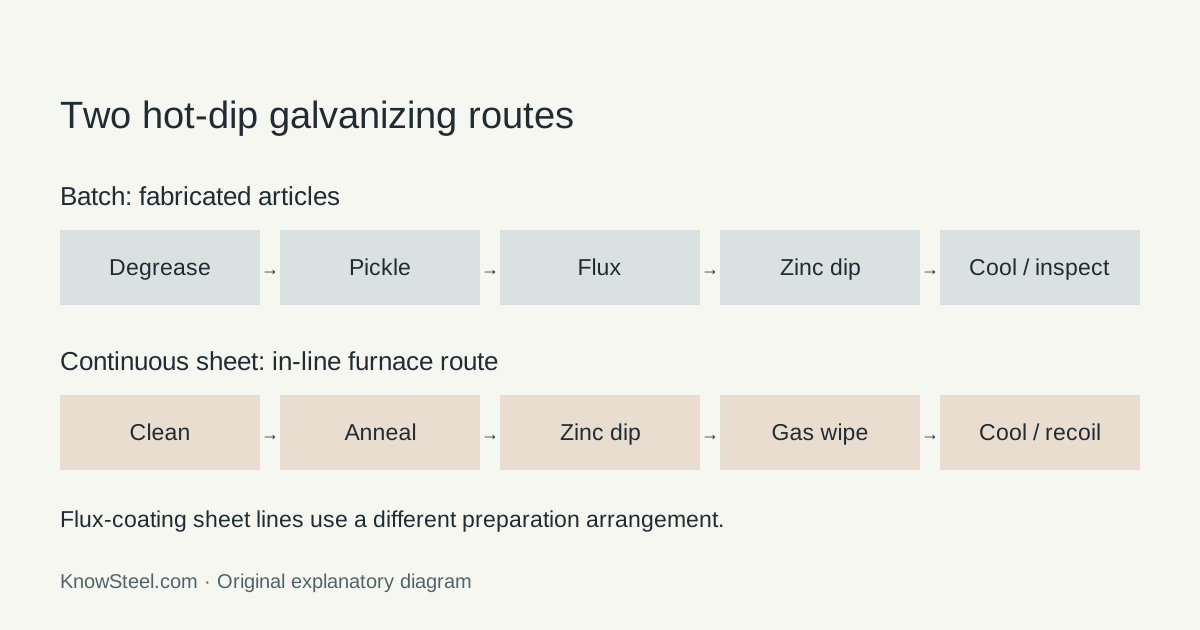
Batch coating occurs after fabrication. Holes, welds and exposed surfaces enter the bath as part of the assembled article. Article geometry, venting and drainage need to suit that route.
Continuous sheet galvanizing
Strip travels through cleaning and, on an in-line annealing route, a reducing furnace before entering the zinc bath. Gas knives remove excess liquid coating. Cooling solidifies it; surface finishing, treatment and recoiling follow. GalvInfoNote 2.1 (December 2017) describes this arrangement and the alternative flux-coating route.
Because sheet is coated before later cutting and forming, newly cut edges expose steel. This is a different coating sequence from dipping an already fabricated item. Product and test requirements reflect that distinction.
Electrogalvanizing and galvannealing
Electrogalvanizing deposits zinc from an electrolyte using electric current. There is no molten-zinc immersion. Galvannealing starts with hot-dip coating and adds heating to develop a zinc-iron coating. The two names identify different processes, not simply different quantities of zinc.
| Route | Coated object | Process distinction |
|---|---|---|
| Batch hot dip | Fabricated article | Prepared article immersed, withdrawn and inspected. |
| Continuous hot dip | Moving strip | Coating controlled while strip runs through the line. |
| Electrogalvanizing | Sheet or other specified product | Zinc deposited electrolytically. |
| Galvannealing | Hot-dip-coated sheet | Post-dip heating develops the zinc-iron coating. |
Scroll within the table to see all columns →
For galvannealed surfaces, read GalvInfoNote 1.3: the alloyed coating brings a different balance of paintability, friction and powdering behavior during forming.
What zinc protection can and cannot do
Barrier protection requires a reasonably continuous layer; sacrificial protection requires an electrochemical path and consumes available zinc. Neither mechanism regenerates an unlimited coating reserve. In normal atmospheric exposure, zinc corrosion products can develop a protective patina; persistent moisture, deposits or aggressive exposure change that behavior. The American Galvanizers Association explains barrier, cathodic and patina protection.
Continuous galvanized/galvannealed sheet falls within the current ASTM A653/A653M-25a scope , checked active on 18 September 2026. This sheet specification is not a universal specification for batch-galvanized fabrications or electroplated products. Read the contract edition and route-specific tests; the product page handles coil-order fields.
Coating formation and mass control
Good wetting requires a clean surface. On a continuous line, gas wiping controls how much molten coating remains before it freezes. That is why line conditions influence coating quantity as well as appearance.
The galvanized coil reference covers G90, Z275, substrate grade and surface treatment. Use the unit converter to change g/m² to oz/ft² while preserving the one-side or both-side basis.
Where protection needs attention
Cutting, welding and severe forming can change the coating locally. Trapped moisture in a packed bundle creates a different exposure from a freely draining installed panel. Paint requires compatible cleaning and pretreatment. Identify these conditions during product selection and fabrication planning.
For coating alternatives, compare zinc and 55% Al-Zn or the Zn-Al-Mg family . Keep corrosion evidence tied to the named product and exposure rather than assigning a lifespan to the process name.