
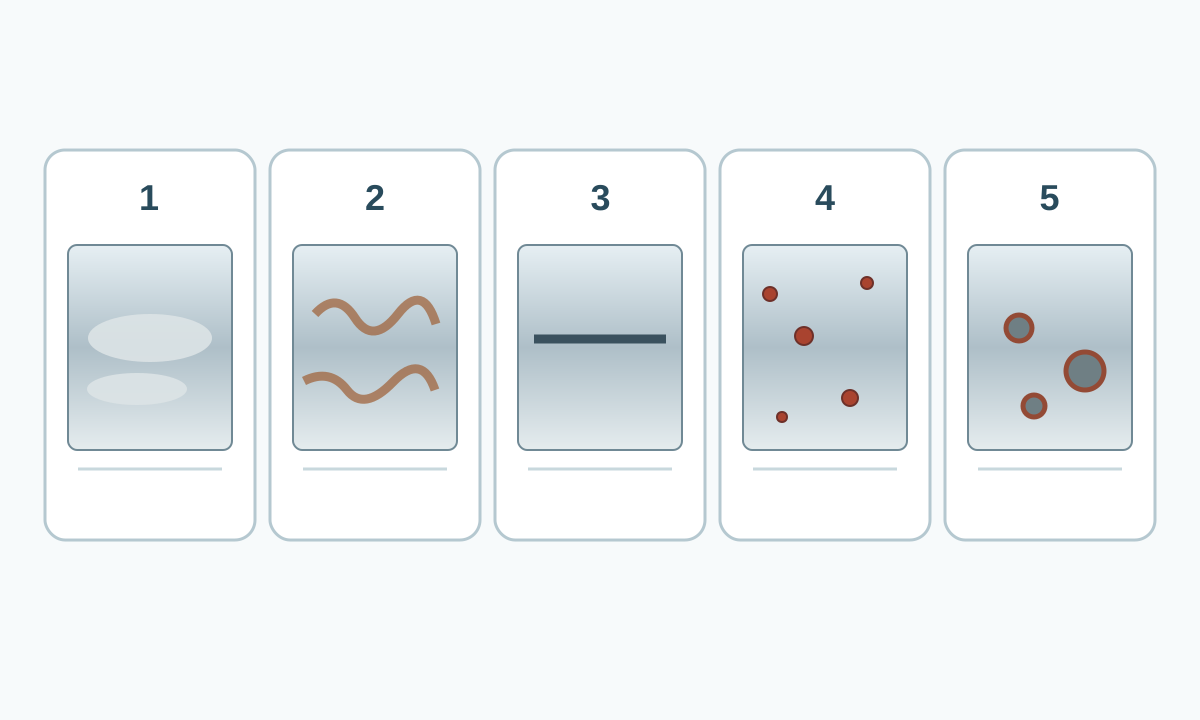
Visible discoloration on stainless steel has several possible causes. Brown staining may be coastal tea staining, orange rust may come from transferred carbon-steel particles, blue-to-straw colours near a weld may be heat tint, and a dull film may be a removable deposit. These conditions need different responses.
Start by identifying where the colour appears, when it developed and whether the surface is actually pitted or damaged. Avoid aggressive treatment until the mechanism is reasonably clear.
Quick diagnosis
| Appearance / location | Likely cause | First check |
|---|---|---|
| Haze, fingerprints, water marks or film | Deposits or residues | Try mild detergent and clean water on a small area |
| Brown staining on exposed architectural surface | Tea staining | Check salt exposure, shelter, finish roughness and wash frequency |
| Straw, blue, purple or dark band beside weld | Weld heat tint | Confirm welding location and post-weld cleaning history |
| Orange spots or rusty streaks after fabrication | Transferred free iron / carbon-steel contamination | Check tools, grinding dust, supports and mixed-metal handling |
| Discrete pits, crevice attack or recurring rust at damaged sites | Localized corrosion or persistent contamination | Inspect depth, geometry, chloride exposure and material grade |
Scroll within the table to see all columns →
1. What “tarnish” means on stainless steel
“Tarnish” is useful everyday language for loss of a clean metallic appearance. Stainless steel normally relies on a thin chromium-rich passive film. A clean surface can maintain or reform that film in an oxygen-containing environment.
Visible colour can sit on an intact passive surface, form within a thicker oxide, originate from foreign iron, or accompany genuine localized corrosion. Diagnose the surface before choosing washing, mechanical finishing or professional chemical treatment.
2. Tea staining
Tea staining is a brown surface discoloration associated with atmospheric corrosion, especially in chloride-bearing exposure. ASSDA describes it as primarily cosmetic in typical architectural cases while emphasizing that grade, finish, salt deposition, humidity, shelter and maintenance affect susceptibility.
Smooth, clean surfaces that receive rain washing or planned cleaning generally perform better than rough sheltered surfaces that retain salts. Recurrent staining should trigger a review of grade, finish, drainage, orientation and cleaning frequency.
3. Heat tint after welding
Welding can produce straw, blue, purple or dark oxide colours beside the weld. BSSA explains that heat tint is a thickening of the surface oxide; chromium is drawn into that oxide and the near-surface metal below can become chromium-depleted.
In aqueous or otherwise corrosion-sensitive service, this local condition can reduce corrosion resistance. Post-weld treatment should match the service and finish requirement. Mechanical finishing, qualified pickling or other professional methods may be used depending on the specification.
Strong pickling acids are controlled industrial chemicals. Their use requires suitable application, rinsing, waste handling and worker protection.
4. Iron contamination and rust transfer
Stainless steel can carry rust that originated from ordinary carbon steel. Nickel Institute guidance identifies shared tools, supports, chains, grinding dust and mixed-metal fabrication areas as common contamination sources.
The orange or brown rust may therefore originate from foreign iron on the surface. Inspect fabrication history and nearby carbon-steel work before deciding that the stainless substrate is corroding.
Prevention relies on segregation, clean dedicated tools and abrasives that have not been used on carbon steel.
5. Deposits, water marks and chemical staining
Fingerprints, hard-water residue, process films and dirt can dull or streak stainless without major metal attack. Start with clean water, mild detergent and a soft non-contaminating cloth or pad. Follow the visible grain on brushed finishes.
Avoid hydrochloric acid and aggressive chloride-containing cleaners. ASSDA specifically warns against hydrochloric acid on stainless, and chloride cleaners can create corrosion risk in susceptible conditions.
If a stain remains after mild cleaning, identify the residue or corrosion mechanism before escalating.
6. Cleaning escalation workflow
- Photograph and map the stain before cleaning.
- Inspect for pits, crevices, scratches, welds and embedded particles.
- Wash a small test area with mild detergent and clean water; rinse and dry.
- Compare persistent staining with fabrication and exposure history.
- Use a stainless-compatible proprietary cleaner or professional finishing method only when the mechanism and finish requirement are known.
- For suspected free iron, heat tint or corrosion-critical service, specify a qualified cleaning, pickling or passivation process and verify the finished surface.
ASTM A380/A380M provides process context for cleaning, descaling and passivation. Because “passivation” is used in several ways in industry, an engineering requirement should define the intended treatment and acceptance result.
7. When discoloration signals real corrosion
Pits, undercut edges, recurring attack inside crevices, material loss or staining that rapidly returns from the same damaged site deserve engineering review. Check alloy grade, chlorides, temperature, drainage, crevice geometry, contamination and surface condition.
A broad cosmetic stain may be less important than a small deep pit. Base the assessment on corrosion morphology and material loss as well as colour.
8. Prevention
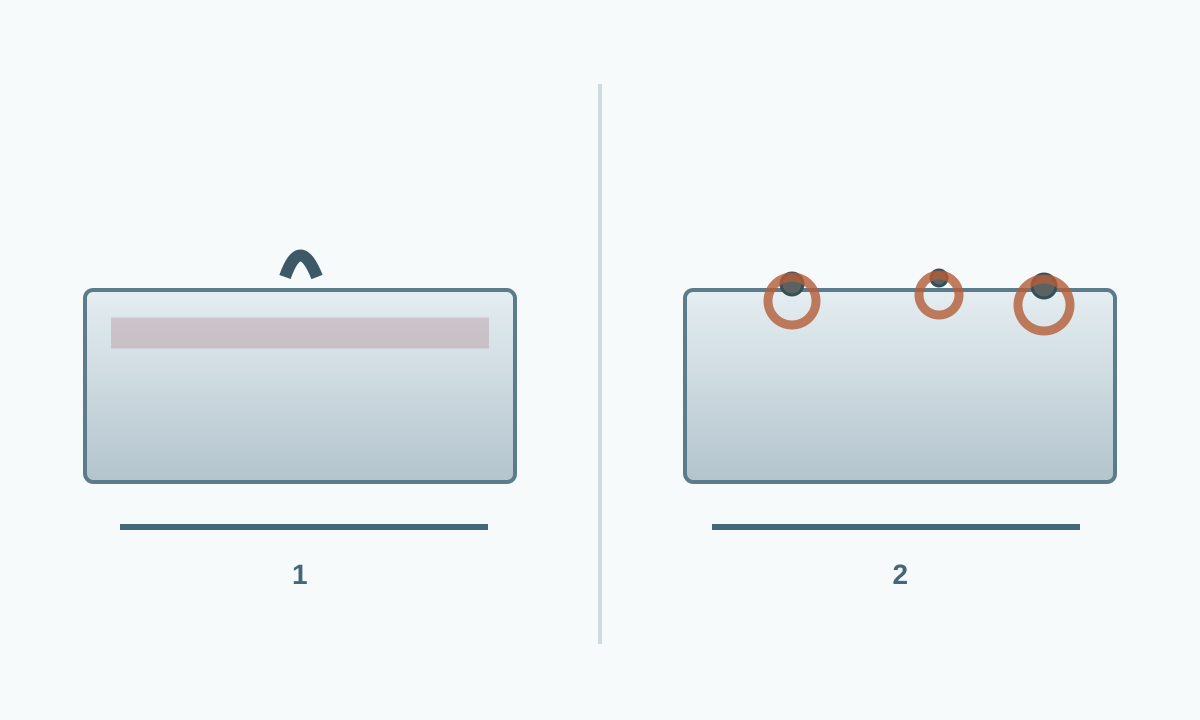
Choose a grade suitable for the environment, use a cleanable surface finish, design for drainage and natural washing where useful, and define maintenance for chloride-bearing exposure.
During fabrication, separate stainless work from carbon-steel grinding and handling, use clean dedicated tools, and define post-weld finish requirements. Remove construction residue promptly after installation.
For cosmetic restoration, see How to Polish Stainless Steel Sheet . If the surface shows true pitting or active corrosion, see Does Stainless Steel Rust? .