
Yes. Stainless steel can rust and corrode. It is much more corrosion-resistant than ordinary carbon steel, but the word “stainless” does not mean corrosion-proof.
Its resistance comes from a very thin chromium-rich passive film that forms naturally on the alloy surface. Under suitable conditions this film remains stable and can reform after minor mechanical damage. Chlorides, tight crevices, contamination and an unsuitable grade can upset that passive condition.
For material families and common grades, see Stainless Steel .
Why stainless steel normally resists rust
Chromium in stainless steel allows a thin, stable oxide layer to form on the surface. This passive film is part of the alloy surface. It is fundamentally different from zinc, paint or another coating applied over a separate steel substrate.
A clean stainless surface can normally repassivate after minor scratching when the surrounding environment supports the passive condition. This self-repairing behavior is an important part of stainless steel’s corrosion resistance. See the stainless corrosion reference and passivation reference .
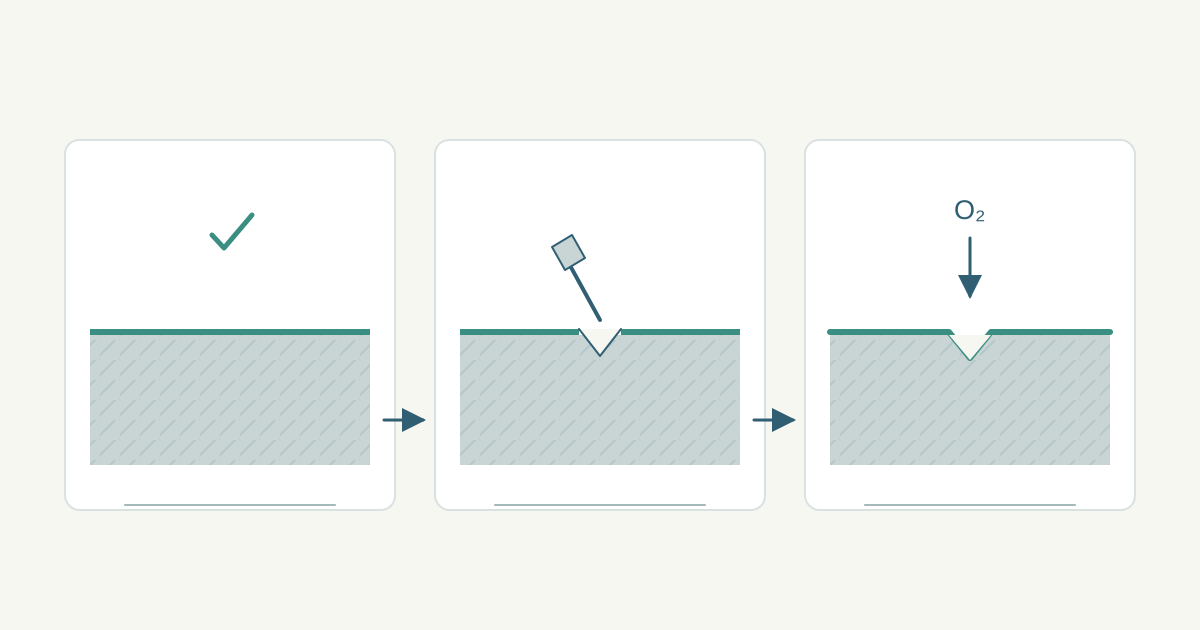
Why can stainless steel rust?
Chlorides can trigger pitting
Chlorides are a major concern for many stainless steels. They are present in seawater, coastal environments, de-icing salts and numerous industrial fluids.
When conditions become sufficiently aggressive for the selected grade, the passive film can break down at a local point. The result may be pitting corrosion rather than broad, uniform rusting.
A pit can have a small opening at the surface while extending farther into the metal underneath. Chloride concentration is only one factor; temperature, acidity, deposits, grade and surface condition also matter.
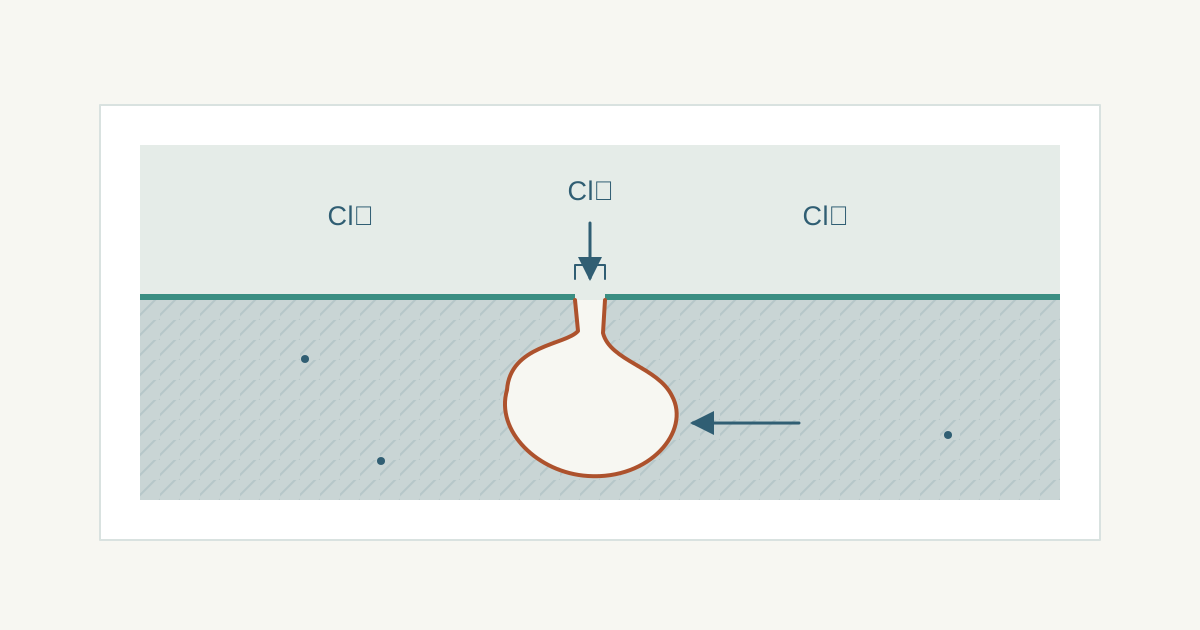
Crevices create a more aggressive local environment
Washers, gaskets, lap joints, deposits and poorly drained details can create narrow crevices.
Inside a crevice, the chemistry can differ from the freely exposed surface. When the local passive condition becomes unstable, crevice corrosion can develop even though nearby stainless steel still looks sound.
Good material selection therefore works together with drainage, cleaning access and component design.
Iron contamination can create rust stains
Rust on stainless steel can come from foreign iron, not only from corrosion of the stainless substrate.
Carbon-steel grinding dust, wire brushes, work tables, handling equipment or nearby fabrication can deposit iron particles on the stainless surface. Those particles can rust and create orange or brown stains.
This distinction matters because cleaning the stain and correcting the source of contamination may solve a different problem from one caused by pitting in the stainless steel itself. See the iron-contamination reference .
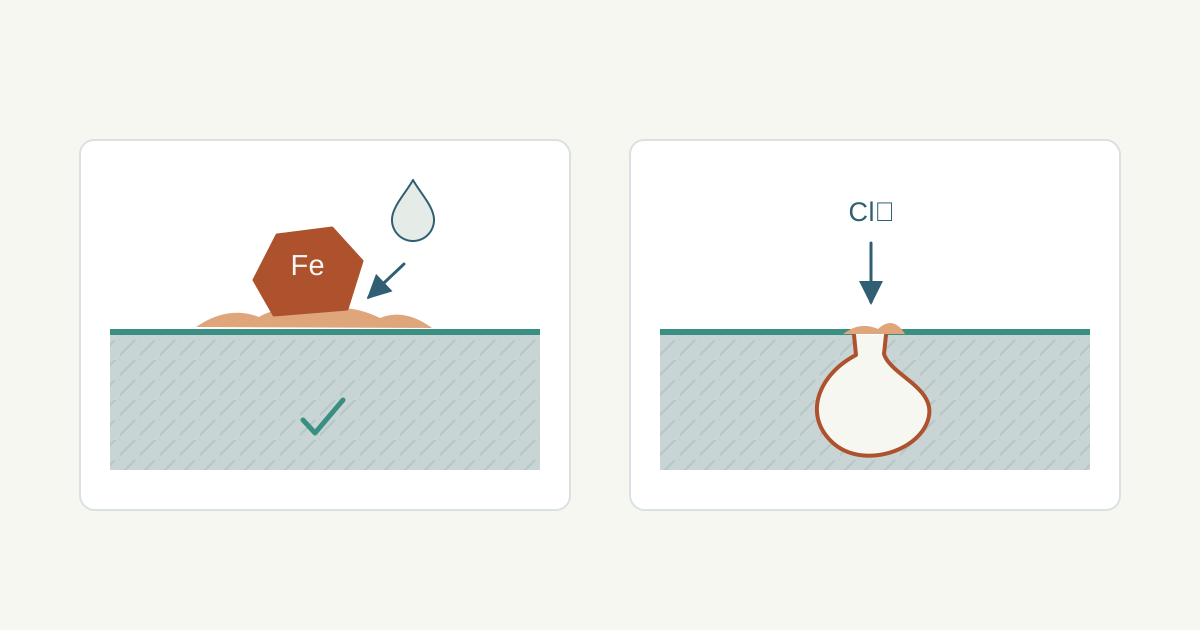
Welding and fabrication affect the final surface
Welding, thermal cutting, grinding and handling can leave heat tint, oxide scale or contamination.
Where corrosion resistance matters, the required post-fabrication surface condition should be specified. ASTM A380/A380M covers cleaning, descaling, pickling and passivation practices for stainless steel parts, equipment and systems. ASTM A967/A967M covers chemical passivation treatments for stainless steel parts.
See ASTM A380/A380M and ASTM A967/A967M .
Rust-like marks do not all mean the same thing
| Observation | Possible cause | What to check |
|---|---|---|
| Light orange or brown staining | Foreign iron, deposited corrosion products or early surface attack | Fabrication, storage and nearby carbon-steel contamination |
| Small isolated cavities | Pitting corrosion | Chlorides, temperature, deposits and grade |
| Attack under gaskets or deposits | Crevice corrosion | Drainage, geometry and trapped solution |
| Rust around recently fabricated areas | Iron contamination, heat tint or an unsuitable final surface condition | Tools, abrasives, welding and post-fabrication treatment |
Scroll within the table to see all columns →
Appearance alone is not enough to identify the mechanism.
Does 304 stainless steel rust?
Yes.
304 performs well in many atmospheric, food-processing and general engineering environments, but it can suffer localized corrosion when the exposure becomes too aggressive.
Chloride-containing environments deserve particular attention. A material being called 304 does not establish a universal chloride concentration, temperature or service condition at which it will always remain passive.
Does 316 stainless steel rust?
Yes.
316 contains molybdenum, which improves resistance to localized corrosion compared with conventional 304 in many relevant environments, especially where chlorides are involved.
That improvement is useful, but 316 is not corrosion-proof. High chloride levels, elevated temperature, deposits, crevices and aggressive process conditions can still cause attack.
The L in 304L and 316L identifies a lower-carbon variant. It should not be read as a general claim of greater immunity to saltwater corrosion.
For the broader grade context, see Stainless Steel .
Does stainless steel rust in water?
It depends on the water and the system.
Clean flowing water can be relatively mild for a suitable stainless grade. Stagnant water, deposits, high chloride content, elevated temperature or tight crevices can create a much more severe local environment.
Saltwater is particularly important because it introduces substantial chloride exposure.
“Used in water” is therefore not enough information for grade selection.
How to reduce the risk of rust and corrosion
| Stage | Priority |
|---|---|
| Grade selection | Match the alloy to the real chloride level, chemicals, temperature and required corrosion margin. |
| Design | Promote drainage and cleaning; reduce stagnant crevices and deposit traps. |
| Fabrication | Control carbon-steel contamination, heat tint and the final surface condition. |
| Cleaning | Remove deposits and contamination using a procedure appropriate for the alloy and service. |
| Inspection | Investigate recurring stains, pits and crevice attack instead of treating every brown mark as the same problem. |
Scroll within the table to see all columns →
Can rust be removed from stainless steel?
Surface rust staining can often be removed, but removing the visible stain does not identify or correct its cause.
If foreign iron caused the staining, the contamination needs to be removed and the source controlled. If the stainless steel has already developed pits, cleaning cannot restore the metal lost to corrosion.
Cleaning, pickling and passivation should be selected for the alloy, component and service requirements. See ASTM A380/A380M and ASTM A967/A967M .
A separate practical guide will cover rust removal and surface restoration in detail.
Frequently asked questions
Is stainless steel rust-proof?
No. Stainless steel is corrosion-resistant. Sufficiently aggressive conditions can break down its passive protection and cause localized corrosion.
Can 304 stainless steel rust?
Yes. Chlorides, deposits, crevices, temperature and other environmental factors can cause localized corrosion when conditions exceed the capability of the grade.
Can 316 stainless steel rust?
Yes. 316 generally provides better resistance to chloride-related localized corrosion than 304, but it can still corrode.
Why is my stainless steel turning orange?
Foreign iron contamination is one possible cause. The stain can also be associated with corrosion products or corrosion of the stainless substrate itself, so the source should be identified before choosing a corrective treatment.
Does scratching stainless steel make it rust?
A clean stainless surface can normally repassivate after minor damage when the environment supports formation of the passive film. Contamination or aggressive local conditions can change that behavior.