
Sheet-metal shearing produces straight blanks without a thermal heat-affected zone. Choose a machine that is rated for the actual material, thickness and cutting width, then qualify its blade clearance, rake, hold-down and support settings on a representative first piece. An acceptable result must meet the drawing, edge-quality and downstream-process requirements together.
This guide covers guillotine-type sheet shears and their setup. For the initial choice between shearing and other cutting processes, use How to Cut Sheet Metal .
What controls a sheared edge
The blade first deforms the material, then separation develops through the thickness. A typical edge has rollover at entry, a relatively smooth burnished band, a fractured region and an exit burr. Their proportions vary with material, thickness, blade condition and setup; there is no universal acceptable band ratio.
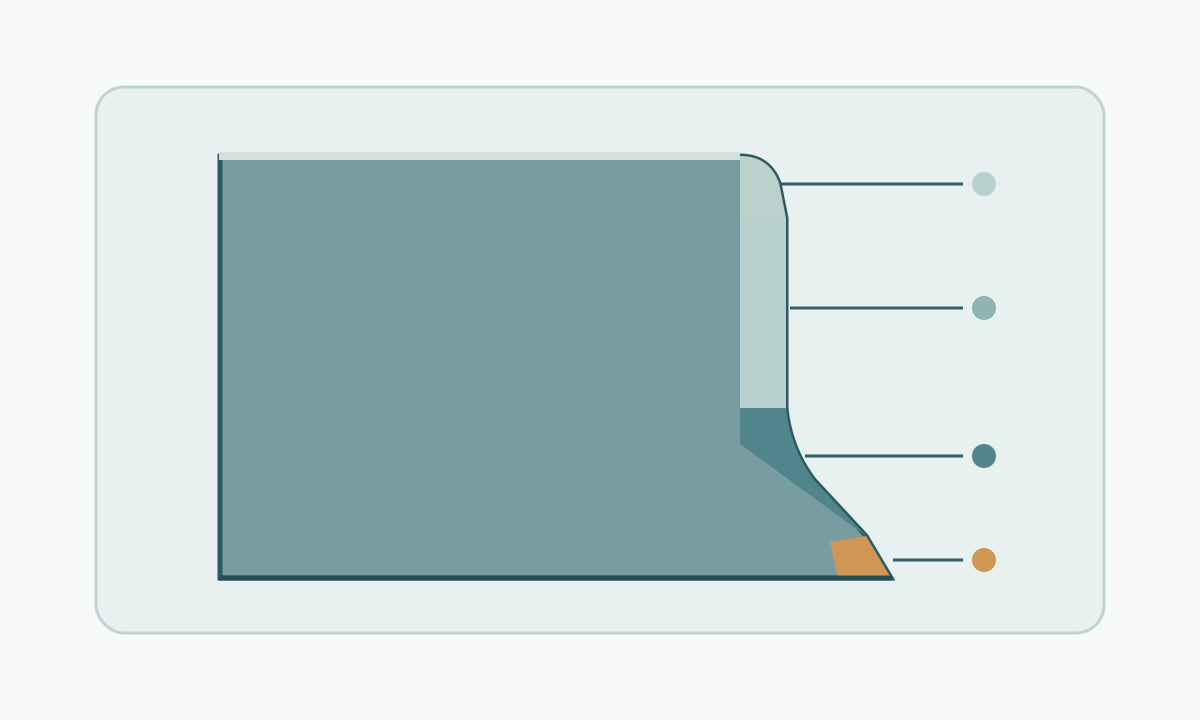
Describe the required edge on the job record: burr limit or approved sample, allowed distortion, dimensional tolerance and the surface that must remain unmarked. A visually smooth edge alone does not demonstrate suitability for subsequent forming.
Material and thickness come first
Confirm grade, condition, actual thickness and cut length against the machine’s capacity chart. Check the strength basis, allowable width and relevant blade specification. Do not transfer a mild-steel thickness rating directly to stainless steel, higher-strength steel or aluminium.
LVD’s HGS data identify a reference steel strength of 450 N/mm². That is the stated basis for those machines, not a limit for every shear. The CINCINNATI capacity manual also ties ratings to material properties and rake; its charts apply within that manufacturer’s stated conditions.
If the grade, thickness or strength lies outside the approved chart, obtain the manufacturer’s application guidance before cutting. A shorter cut or a different control setting does not automatically authorize exceeding the rated capacity.
Set clearance from the machine documentation
Blade clearance is the gap between the cutting edges. Both unsuitable clearance and worn or damaged blades can produce an unacceptable edge. Excessive burr is therefore a reason to inspect the setup, not proof that one specific adjustment is required. SSI’s shearing explanation describes clearance and dull-edge effects in its hot-rolled-steel context.
Use the machine’s material/thickness chart or approved control program as the starting point. Confirm the entered material and measured thickness, inspect blade condition through the authorized procedure, and check the first cut. Do not apply a fixed percentage of thickness to every material or machine. Gap checks and blade adjustment belong to trained personnel following the required isolation procedure.
Coordinate rake hold-down and support
Rake is the angle along the cutting blade that makes the cut progress across the sheet. It changes the cutting action and can affect strip twist or bow. The available range and capacity at a chosen rake are machine-specific. LVD’s MVS information illustrates adjustable rake and clearance; its settings are not a prescription for other equipment.
Hold-downs restrain the sheet; the backgauge establishes the length reference. Neither corrects an unsquared reference edge or poor support. Verify the approved hold-down arrangement, squaring reference, backgauge position and support of both the incoming sheet and separated piece. Narrow strips and large thin sheets need particular attention to distortion and handling.
Keep contact surfaces clean and compatible with the finish. Do not add improvised packing under a hold-down or reach behind the blade to support an offcut. Use the machine’s approved handling equipment and procedure.
Account for material and surface condition
Higher-strength steels and many stainless grades can demand different capacity limits and blades from the reference mild steel. Grade and condition matter; a material name alone is not enough to select the setup. For aluminium, alloy, temper and ductility also affect the edge.
Galvanized, prepainted, polished and film-protected sheets require checks for scratches, pressure marks and coating damage. Establish which face is cosmetic and whether the coating system or end use requires treatment of the exposed cut edge. Do not promise that shearing preserves corrosion protection at every cut.
European Aluminium’s cutting manual discusses the relationship between cut-edge condition and later forming in aluminium applications. Its blanking and trimming examples are not universal guillotine-clearance settings for steel.
Inspect a representative first piece
Use the production material and representative cut length, strip width and support arrangement. Check:
- Finished dimensions and squareness against the drawing
- Burr height and consistency at several positions along the cut
- Rollover, fracture appearance and local tearing
- Twist, bow and other edge or blank distortion
- Scratches, pressure marks, coating damage and loose edge fragments
- Whether the edge is suitable for the specified bending, welding, coating or exposed service
Use the agreed inspection method and acceptance limits. A first piece that passes only its width check is not sufficient. Where deburring or edge finishing is required, define the method and recheck the relevant dimensions and edge condition afterward.
Diagnose symptoms before changing settings
| Observed symptom | Checks before an approved adjustment |
|---|---|
| Heavy burr or rough fracture across the cut | Correct material and thickness entry, clearance, blade sharpness and damage |
| Edge quality changes from one end to the other | Gap uniformity, localized blade wear, alignment and support |
| Narrow strip twists or bows | Approved rake, strip geometry, support and incoming-sheet condition |
| Width or squareness varies | Backgauge reference, squaring edge, hold-down effectiveness and sheet movement |
| Scratches or coating marks appear | Debris, contact surfaces, handling and approved hold-down contact arrangement |
Scroll within the table to see all columns →
These are diagnostic leads, not one-to-one fault rules. Stop if the result suggests machine damage or an unsafe condition. Have authorized personnel investigate, change settings only within the approved procedure, and inspect a new trial piece before restarting the batch.
Match production planning to the finished blank
Shearing suits straight trimming and repeated rectangular blanks. Confirm cut sequence, reference edges, nesting allowance, safe offcut handling and the ability to support the last cuts. Internal holes and curved profiles require a suitable additional process; the broader method comparison remains in How to Cut Sheet Metal .
Compare usable output rather than strokes alone. Loading, gauging, sorting, deburring and rejected blanks can determine throughput. For repeat work, retain the approved setup and representative inspection record, and define checks after a material change, blade service or setup change.
Keep guarding and isolation effective
Only trained, authorized personnel should operate or set up the shear. Keep guards and protective devices effective, stay outside the cutting and hold-down danger zones, and use approved sheet handling. Sharp edges and falling offcuts remain hazards after the cutting stroke.
Follow the manufacturer and site’s energy-isolation procedure for blade work, maintenance and clearing jams where hazardous access is required. An emergency stop alone does not establish safe isolation. OSHA’s general machine-guarding guidance explicitly includes shears and addresses lockout/tagout. It is US guidance; the installation must meet the workplace requirements that apply locally.
Record the setup and acceptance requirements
Keep these items with the job:
- Material grade and condition, actual thickness, cut length and surface requirements
- Machine identification, applicable capacity chart and approved blade specification
- Approved program or setup reference for clearance, rake, hold-down, backgauge and support
- Drawing dimensions, squareness, burr and distortion acceptance criteria
- Required deburring, edge treatment and downstream acceptance checks
- First-piece results, inspection frequency and triggers for requalification
Release the batch only when the finished blank meets the agreed requirements. Record unresolved edge-quality problems for investigation rather than carrying an unverified setting into the next job.