
Stainless grade selection works best when the service environment is defined before a familiar grade name enters the discussion. The material must survive the actual chemistry, temperature, wetting pattern and cleaning regime while also meeting strength, forming, welding, surface, hygiene and cost requirements.
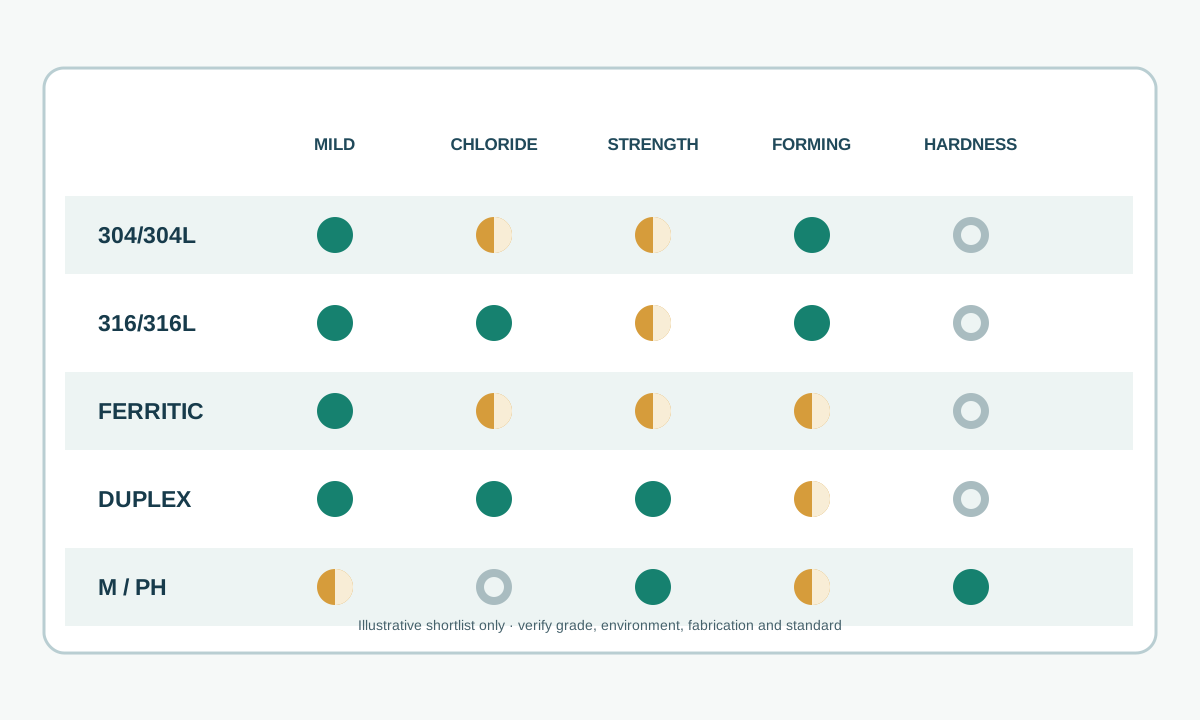
304 and 316 solve many applications, yet the stainless family is much broader. Ferritic grades can suit cost-sensitive or thermally demanding sheet applications. Duplex grades combine higher strength with strong resistance to several chloride-related corrosion mechanisms. Martensitic and precipitation-hardening grades serve applications where hardness or high strength is central.
Use the steps below to narrow the field, then verify the final grade against the governing product standard, code, supplier data and service conditions.
Quick stainless steel family selector
| Family / common examples | Why it enters the shortlist | Important checks |
|---|---|---|
| Austenitic — 304/304L, 316/316L | Broad corrosion resistance, good formability, good weldability, high toughness | Chlorides, crevices, temperature, work hardening, surface finish |
| Ferritic — 430, 444 and related grades | Nickel-lean family, useful oxidation/corrosion performance in suitable environments, lower thermal expansion than austenitic grades | Grade-specific weldability/formability, toughness, corrosion environment |
| Duplex — 2101, 2304, 2205, super duplex families | High proof strength and strong resistance to chloride stress-corrosion cracking; useful localized-corrosion performance depending on grade | Welding procedure, phase balance, grade-specific temperature limits, availability and forming force |
| Martensitic | Heat-treatable hardness, strength and wear resistance | Corrosion level, heat-treatment condition, weldability and toughness |
| Precipitation hardening | High strength/hardness after controlled heat treatment with stainless corrosion performance | Required condition, heat treatment, toughness, product form and code acceptance |
Scroll within the table to see all columns →
1. Define the corrosion environment first
Stainless corrosion resistance comes from a thin passive film that forms on a chromium-containing surface. Service conditions that damage or locally break down that film determine how much alloying and what grade family may be needed.
Describe the environment in practical terms:
- indoor, outdoor, sheltered or regularly rain-washed;
- fresh water, seawater splash, deicing salt, food/product solution or process chemical;
- chloride concentration and whether evaporation can concentrate salts;
- pH and oxidizing/reducing character;
- minimum and maximum operating temperature;
- continuous immersion, intermittent wetting or condensation;
- crevices, deposits, gaskets and stagnant zones;
- cleaning chemicals, sanitizing temperature and cleaning frequency.
Chlorides deserve special attention because they promote pitting and crevice corrosion and can contribute to stress-corrosion cracking under the right stress and temperature conditions. Higher chromium, molybdenum and nitrogen generally improve resistance to localized corrosion, but a composition index such as PRE/PREN only ranks alloys approximately. It does not predict service life in a real geometry and environment.
2. Decide whether 304 or 316 is enough
304/304L is a common starting point for general fabrication, architectural interiors, equipment and many mildly corrosive services. It combines good formability, weldability and a broad supply base.
316/316L adds molybdenum and generally improves resistance to pitting and crevice corrosion in chloride-bearing environments compared with 304. That advantage often matters in coastal exposure, food/process equipment, washdown service and chemical applications.
The word “marine” alone is too vague for a grade decision. Salt concentration, wetting, temperature, crevices, cleaning and surface finish can move an application beyond the practical capability of standard 316. For the direct comparison, see 304 vs 316 stainless steel .
Low-carbon L grades are widely specified where welding and resistance to sensitization in the fabricated condition matter. The exact grade and product form still need to match the applicable material standard and design code.
3. Consider ferritic stainless when its property set fits
Ferritic stainless steels use a chromium-based ferritic microstructure and are generally nickel-lean. They are magnetic and have thermal expansion closer to conventional steels than austenitic stainless. Certain ferritic grades offer useful corrosion resistance and can be attractive for appliances, exhaust/heat applications, architectural components and sheet products.
Ferritic selection is grade-specific. Weldability, toughness, formability and section thickness deserve closer review, especially when welding or severe forming is part of the route. A low alloy cost does not compensate for a family mismatch with the fabrication process or environment.
Magnetism is therefore a poor pass/fail test for stainless quality. Read Is Stainless Steel Magnetic? for the microstructure behind that behavior.
4. Move to duplex when strength and chloride performance justify it
Duplex stainless steels contain substantial ferrite and austenite. This mixed microstructure gives them higher proof strength than common austenitic grades and generally better resistance to chloride stress-corrosion cracking.
Within the duplex family, corrosion resistance ranges from lean duplex grades through 2205 to super duplex products. A project can sometimes reduce thickness because of higher strength, although structural stability, fatigue, fabrication, corrosion allowance and code rules still govern the design.
Duplex fabrication needs qualified welding procedures and control of heat input/interpass practice to maintain a suitable microstructure. Service-temperature limits are grade- and code-dependent, so the specific datasheet and governing standard should be checked before using a duplex grade in hot service.
5. Use martensitic or PH grades when hardness or very high strength drives the choice
Martensitic stainless steels can be heat treated to high strength and hardness. Typical uses include wear parts, cutting components, shafts and mechanical parts where hardness matters more than the broad formability of an austenitic sheet.
Precipitation-hardening stainless steels obtain high strength through solution treatment/aging routes. Their performance depends strongly on the specified heat-treatment condition.
For either family, purchasing only by generic stainless name is inadequate. Specify the exact grade, condition, mechanical-property requirement and product form.
6. Check fabrication before freezing the grade
Two grades with adequate corrosion resistance can behave differently in production.
Forming
Austenitic grades are usually highly formable and work-harden strongly. Duplex grades have higher strength and can require more forming force. Ferritic and martensitic grades have different ductility and bending behavior. Tight radii, deep drawing and complex forming should be checked against grade-specific supplier guidance.
Welding
Weldability varies by family and grade. Common austenitic grades are broadly weldable, while duplex requires control that protects phase balance and corrosion performance. Martensitic welding may require preheat, post-weld heat treatment or other grade-specific measures.
Machining
Austenitic stainless can work-harden during machining. Free-machining variants may improve productivity while changing corrosion or welding behavior. Tooling, feeds, cooling and surface requirements belong in the material decision.
7. Include strength, stiffness and thickness in the same decision
Elastic modulus among common stainless families is similar enough that a simple grade change does not transform stiffness the way a geometry change does. Yield/proof strength, however, can differ substantially.
High-strength duplex or precipitation-hardening grades may allow thinner sections in a strength-controlled design. Buckling, deflection, local stiffness, fatigue, weld details, minimum gauge, corrosion and fabrication limits can prevent a direct proportional thickness reduction.
Select the grade and section together, then verify the final geometry.
8. Surface finish, hygiene and contamination can decide the grade
Surface condition affects corrosion and cleanability. Rough surfaces retain deposits more readily, while smoother surfaces can improve rinsing and cleaning. Fabrication contamination from carbon-steel particles can create rust staining on stainless surfaces.
Food, pharmaceutical and hygienic equipment may impose finish, weld-quality and cleanability requirements beyond the base alloy designation. Product-contact chemistry, cleaning agents, sterilization temperature and regulatory requirements should be captured in the specification.
A visually attractive finish does not upgrade an under-alloyed grade for an aggressive process environment; alloy choice, design, fabrication and maintenance work together.
9. Check temperature and mechanical service
Cryogenic service, elevated-temperature oxidation, thermal cycling, creep, impact toughness and stress-corrosion cracking introduce different material-selection questions.
Austenitic stainless steels retain high toughness at low temperature. Ferritic and martensitic families can have impact-transition considerations. High-temperature service may require heat-resistant grades that are selected for oxidation resistance and creep behavior rather than room-temperature corrosion alone.
Use the actual design temperature range and applicable code data. Avoid transferring a room-temperature datasheet value directly into a pressure, structural or high-temperature design.
10. Put the full grade requirement on the purchase order
A useful stainless specification normally includes:
- governing material/product standard;
- exact grade or UNS/EN designation as required;
- product form and delivery condition;
- dimensions and tolerances;
- surface finish;
- heat-treatment condition where relevant;
- mechanical or corrosion requirements required by the project;
- weld/fabrication restrictions where they affect supply;
- inspection certificate, traceability and test documentation;
- any project-specific cleanliness, packaging or contamination controls.
ASTM A240/A240M-26, for example, covers chromium, chromium-nickel and chromium-manganese-nickel stainless plate, sheet and strip for pressure-vessel and general applications and specifies chemical and mechanical requirements. It provides product requirements; service suitability still comes from the design conditions and applicable code.
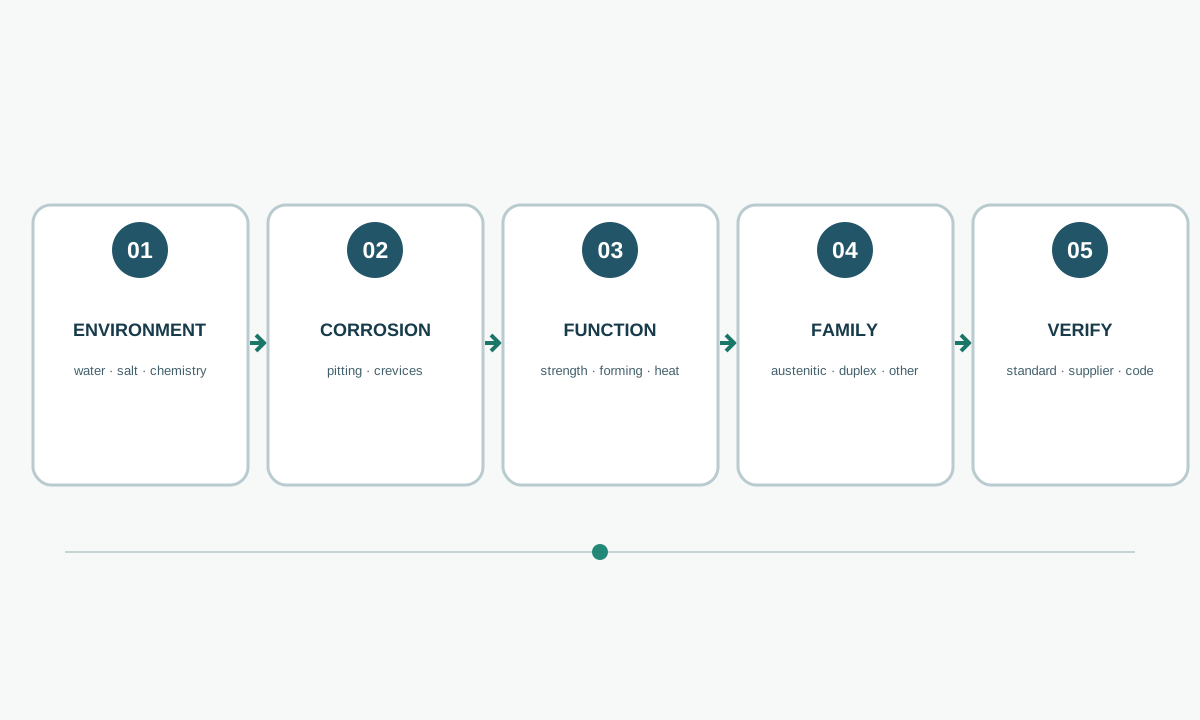
A practical decision sequence
- Describe the environment and likely corrosion mechanisms.
- Set strength, toughness and temperature requirements.
- Define forming, welding, machining and finish needs.
- Shortlist a stainless family, then specific grades.
- Check supplier data, code limits, product availability and fabrication capability.
- Compare total installed and maintenance cost among grades that already meet the technical requirements.
- Put the selected grade, condition, finish, tolerance and documentation into the order.
That sequence keeps a familiar grade name from becoming the starting assumption and gives corrosion, manufacturing and verification requirements equal weight.