
Welding galvanized steel adds one major variable to an ordinary steel joint: the zinc coating enters the heat-affected work area. Heated zinc can generate zinc-oxide fume, and zinc near the arc can also affect arc stability, spatter, porosity and surface condition. A sound workflow therefore covers worker exposure, coating preparation, the qualified weld procedure and restoration of corrosion protection after the joint cools.
For structural, code-governed or production welding, follow the applicable WPS, welding code, employer exposure-control program and project specification. The steps below explain the control logic and help identify what the procedure must address.
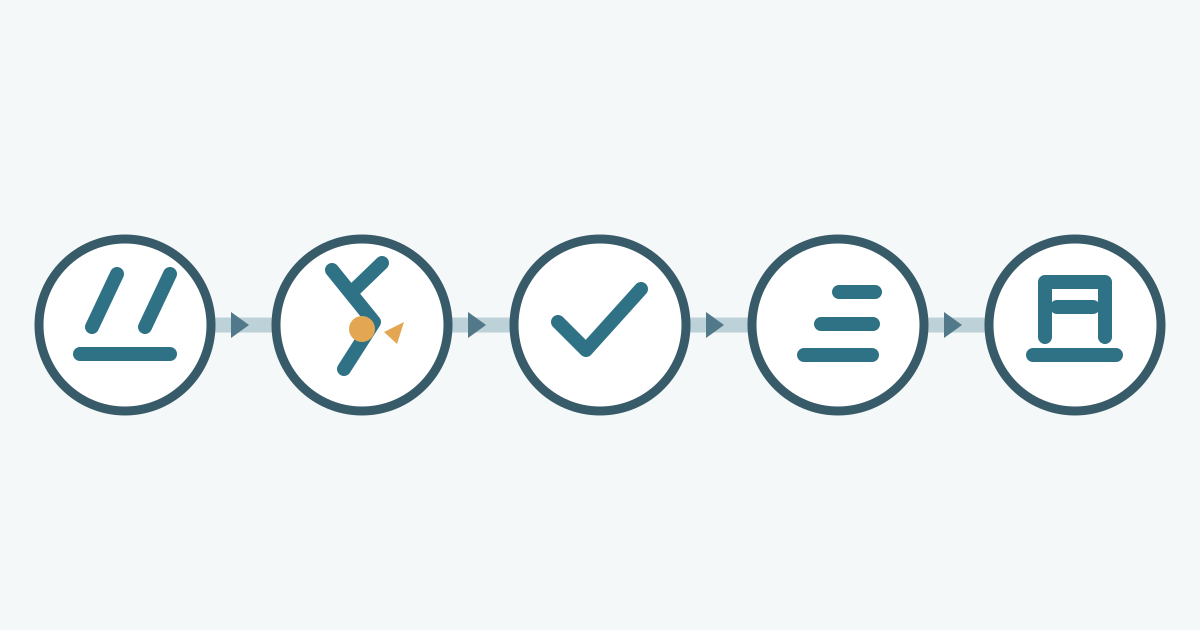
The workflow at a glance
| Stage | Main control | Why it matters |
|---|---|---|
| 1. Identify the material | Confirm steel grade, zinc coating type, coating thickness/system and any paint or secondary coating | Base-metal weldability and coating hazards can differ |
| 2. Control exposure | Provide suitable local exhaust/general ventilation and required respiratory controls | Zinc-oxide fume can cause metal fume fever; other coatings can add hazards |
| 3. Prepare the joint | Remove zinc where the WPS/project procedure requires clean steel at the weld zone | Reduces zinc entering the weld and can improve arc behavior and weld quality |
| 4. Weld to procedure | Use the qualified process, filler, joint preparation and parameters for the base steel | Galvanizing does not define the substrate grade or structural weld requirements |
| 5. Inspect and clean | Remove slag/spatter as applicable and inspect the weld and adjacent coating damage | Repair work starts from a sound, clean joint |
| 6. Restore protection | Repair damaged galvanized coating under the applicable coating specification | The weld area loses part or all of its original zinc protection |
Scroll within the table to see all columns →
1. Treat zinc fume as an exposure-control issue
OSHA identifies zinc oxides as fumes associated with galvanized steel and notes that zinc exposure is a usual cause of metal fume fever. NIOSH describes symptoms that can include fever, chills, muscle aches, nausea, cough and other flu-like effects after zinc-oxide fume exposure.
The practical response is engineering control. Position local exhaust so it captures fume near the source without disrupting shielding gas where a gas-shielded process is used. General ventilation may supplement source capture. Confined spaces require their own controls, monitoring and entry/welding procedures. Where ventilation cannot keep exposure within applicable limits, respiratory protection must be selected and managed through the workplace respiratory-protection program.
Do not use visible smoke or odor as an exposure meter. Avoid folk remedies such as drinking milk; they do not replace exposure control or medical evaluation after significant symptoms.

2. Identify every coating before heating
“Galvanized” usually tells you zinc is present; it does not prove the surface contains only zinc. Fabricated parts may also have paint, sealers, passivation systems, oils or previous repair coatings. Old painted steel can contain substances requiring controls beyond zinc-fume management.
Confirm:
- base steel grade and product form;
- hot-dip galvanized after fabrication, continuously galvanized sheet, electrogalvanized or another zinc system;
- zinc coating thickness or designation when available;
- paint, powder coating, sealant or repair material near the hot-work zone;
- the governing welding procedure and coating-repair specification.
This check also prevents a common specification error: the zinc coating does not tell you the carbon-equivalent, strength grade or weldability of the steel underneath.
3. Decide how much zinc must be removed from the weld zone
For conventional welding after hot-dip galvanizing, the American Galvanizers Association recommends removing zinc around the intended weld area so welding occurs on clean steel. Its published structural guidance cites removal on both sides of the part and a distance in the range of roughly 1–4 in. from the intended weld zone, with grinding identified as an effective removal method.
That guidance should be applied in context. Thin pre-galvanized sheet is also welded in high-volume manufacturing using qualified procedures that may tolerate or intentionally account for coating near the joint. The correct preparation comes from the WPS, product type, joint design, coating system and exposure-control plan.
When mechanical removal is required, control the generated dust and debris as part of the job’s exposure and housekeeping plan. Keep prepared surfaces clean before welding.
4. Weld the base steel, not the coating designation
After preparation, process selection follows the base metal, joint and code. GMAW/MIG, FCAW, SMAW and other processes can be used on galvanized steel when an appropriate procedure is qualified or otherwise permitted for the work.
Zinc that reaches the arc can vaporize before the steel melts. Excess zinc around the joint can increase spatter and contribute to porosity or irregular bead behavior. Good fit-up, consistent coating preparation and a procedure developed for the actual product are more reliable than universal “galvanized settings.”
Avoid generic voltage, current or travel-speed tables that ignore steel thickness, filler, position, joint geometry and process mode. Use the approved WPS and consumable manufacturer data.
5. Inspect the weld and the heat-damaged coating separately
A weld can be structurally acceptable while the nearby corrosion protection still needs repair. After the joint has cooled enough for the specified repair system, clean the affected area and inspect both the weld and the coating boundary.
Check the items required by the fabrication specification: weld profile/discontinuities, spatter or slag, bare steel created by grinding, burned zinc around the heat-affected area, and any damaged coating on the reverse side.
Do not hide a questionable weld under repair paint. Complete required weld inspection first.
6. Restore corrosion protection after welding
For applicable hot-dip galvanized products, ASTM A780/A780M-20 covers repair of damaged and uncoated areas, including coating damaged by welding or cutting. The standard describes three repair material categories: zinc-based solders, zinc-dust paints and sprayed zinc (metallizing). Project requirements determine which method is acceptable and what preparation/thickness criteria apply.
Continuously galvanized sheet, painted galvanized systems and proprietary coating assemblies may use a different repair specification. Follow the governing product/coating document instead of assuming A780 applies to every zinc-coated sheet.
Common mistakes to avoid
- Welding an unknown coated part before identifying paint or secondary coatings.
- Positioning the welder directly in the fume plume because the shop has general ventilation somewhere in the room.
- Treating a respirator as a substitute for feasible source capture and exposure control.
- Grinding zinc from only the visible face when the procedure requires preparation on both sides.
- Copying settings from bare steel without validating the joint, coating and WPS.
- Leaving burned or ground-off zinc unrepaired in a corrosive environment.
- Applying a coating repair before required weld inspection is complete.
- Assuming every zinc-coated sheet uses the same post-weld repair standard.
Pre-weld checklist
| Check | Question |
|---|---|
| Material | Do we know the steel grade and product form? |
| Coating | Do we know the zinc system and any secondary coating? |
| Procedure | Is the correct WPS/code/project requirement identified? |
| Exposure controls | Are source capture, ventilation and respiratory requirements set for this work location? |
| Joint preparation | Does the procedure define where coating must be removed? |
| Fire/hot work | Are hot-work, combustible-material and confined-space controls satisfied? |
| Repair | Is the required post-weld corrosion-protection method known before work starts? |
Scroll within the table to see all columns →
Bottom line
A safe galvanized-steel weld is planned as one controlled sequence: identify the substrate and coatings, control fume exposure, prepare the weld zone to the approved procedure, make and inspect the weld, then restore the specified corrosion protection. The zinc layer improves service corrosion resistance, while the welding job still depends on the base-steel WPS and a separate exposure-control plan.
For the zinc-coating process itself, see What Is Galvanizing? . For substrate terminology and grade context, see Carbon Steel .