
Galvanic corrosion is accelerated attack on the anodic member of an electrically connected material pair exposed to a common electrolyte. A wet joint between dissimilar metals can create this condition, including at fasteners, coated edges and concealed supports. The useful design question is whether the assembled detail completes the corrosion circuit, how much surface participates and how long it stays wet.
Follow both paths through the joint
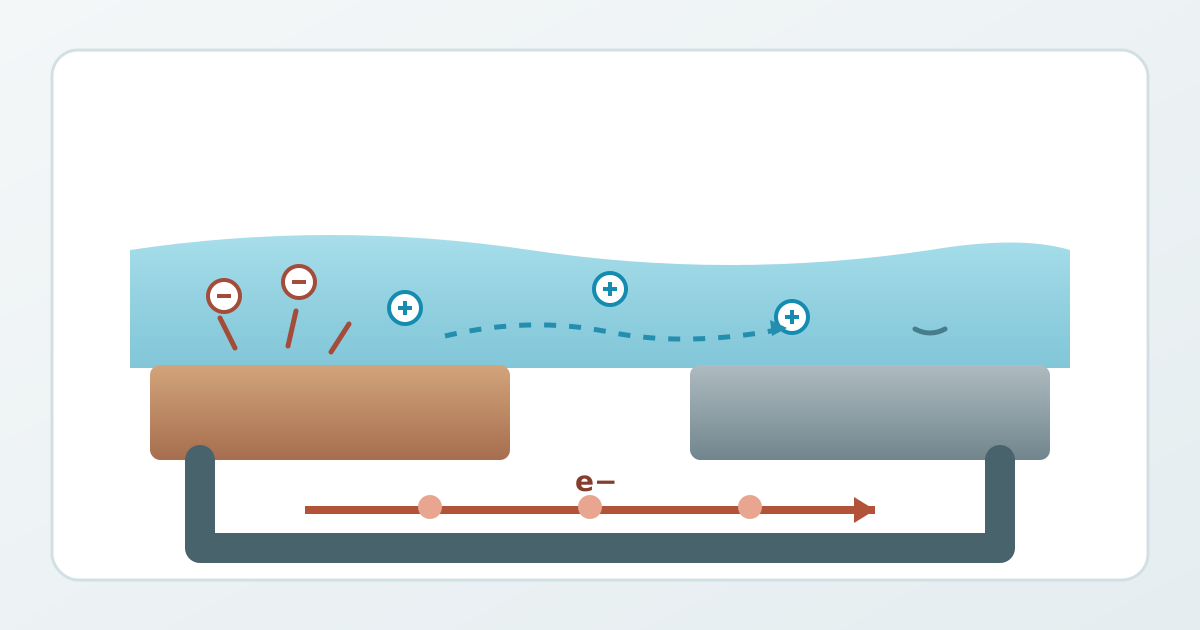
At the anode, oxidation releases metal ions and electrons. Electrons travel through the metallic connection to the cathode, where a reduction reaction consumes them. In aerated, near-neutral water, oxygen reduction is a common cathodic reaction. Ions carry charge through the electrolyte between the wetted surfaces. A rain film, condensation or damp salt-containing debris can provide that ionic path. A cathodic role in this couple does not establish immunity to pitting, crevice corrosion or other independent attack.
The metals need electrical continuity, although their visible faces need not touch. A bolt, backing plate, common frame or bonding conductor can complete the metallic route. Separation at one interface therefore deserves a check of the rest of the assembly. Conversely, without a connecting electrolyte, this aqueous galvanic circuit cannot operate. Dry appearance at one inspection does not establish that a concealed joint stays dry in service.
Read a galvanic series with its environment
A galvanic series orders measured corrosion potentials for a stated environment and condition. Check the electrolyte, temperature, aeration and reference electrode when using one. A seawater series cannot establish performance in every industrial solution or intermittent rain film. Standard electrode-potential tables describe a different reference basis and cannot replace service-specific corrosion evidence.
Stainless steel may appear in active and passive conditions because its surface state changes its electrochemical behaviour. Alloy grade alone does not fix its position for every exposure. Potential separation indicates a possible driving force; reaction kinetics, polarisation and resistance determine how much current develops. No universal voltage difference or spacing on a chart proves that a pair is safe.
The public scope of ASTM G82-98(2021)e1 addresses developing and using galvanic series. Use it to frame the evidence needed, rather than treating a reproduced chart as a compatibility certificate. The carbon-steel and stainless-steel comparison explains the separate material differences.
Count exposed wetted area, including defects
A small anodic surface coupled to a large cathodic surface is often an unfavourable arrangement. The relevant areas are those exposed to the participating electrolyte and able to support the reactions. Painted, dry or electrically isolated parts of a nominal component do not automatically count. Thin moisture films can restrict the effective reach of a couple; immersion or conductive contamination can change it.
An arithmetic example makes the concentration effect clear. If an illustrative galvanic current of 2 mA is distributed over 20 cm² of exposed anode, its average galvanic current density is 0.1 mA/cm². If the same assumed current passes through a 0.2 cm² defect, the average is 10 mA/cm²: 100 times greater. This comparison holds current fixed to explain division by area. A real change in area also changes the electrochemical system and may change current. These numbers predict neither thickness loss nor service life, and exclude any separate self-corrosion contribution.
| Detail to examine | Why it matters | Evidence to obtain |
|---|---|---|
| Small anodic fastener in a large cathodic sheet | Attack can concentrate on a mechanically important part. | Fastener alloy and coating, wetted geometry and assembly approval. |
| Paint damage on the anodic member | A small exposed defect can face a much larger uncoated cathode. | Condition at holes, cut edges and contact points after assembly. |
| An insulating washer above a conducting bolt | The shank, threads or another connection may preserve electrical continuity. | Complete isolation detail and permitted continuity verification. |
| A sheltered lap that retains salty debris | Long wet periods can sustain a conductive electrolyte. | Drainage, cleaning access and observations after wet weather. |
Scroll within the table to see all columns →
Why fastener size and zinc protection matter
A small stainless-steel fastener in a much larger galvanized component can have a more favourable area relationship than a small galvanized fastener securing a large stainless-steel sheet. This explains many successful mixed-metal details. It does not make every stainless fastener acceptable: local wetting, crevices, exposed zinc area, coating damage and the exact assembly still matter. Marine aluminum assemblies also require particular care; nominally large aluminum parts can suffer local attack around stainless fixings.
Obtain the system supplier’s accepted fastener and isolation arrangement, especially for roofing or structural connections. Changing a washer or adding a soft separator can alter load transfer, preload or movement. Galvanic compatibility is only one requirement for a suitable connection.
Zinc on galvanized steel intentionally supplies sacrificial protection to nearby exposed steel when the necessary circuit exists. The zinc is consumed, and its protective reach depends on electrolyte and geometry. It is a finite local resource. Extensive damage or a large cathodic attachment can demand more protection than the available coating can sustain. For corrosion-product identification and coating depletion, see whether galvanized steel rusts .
Make isolation and coating details survive assembly
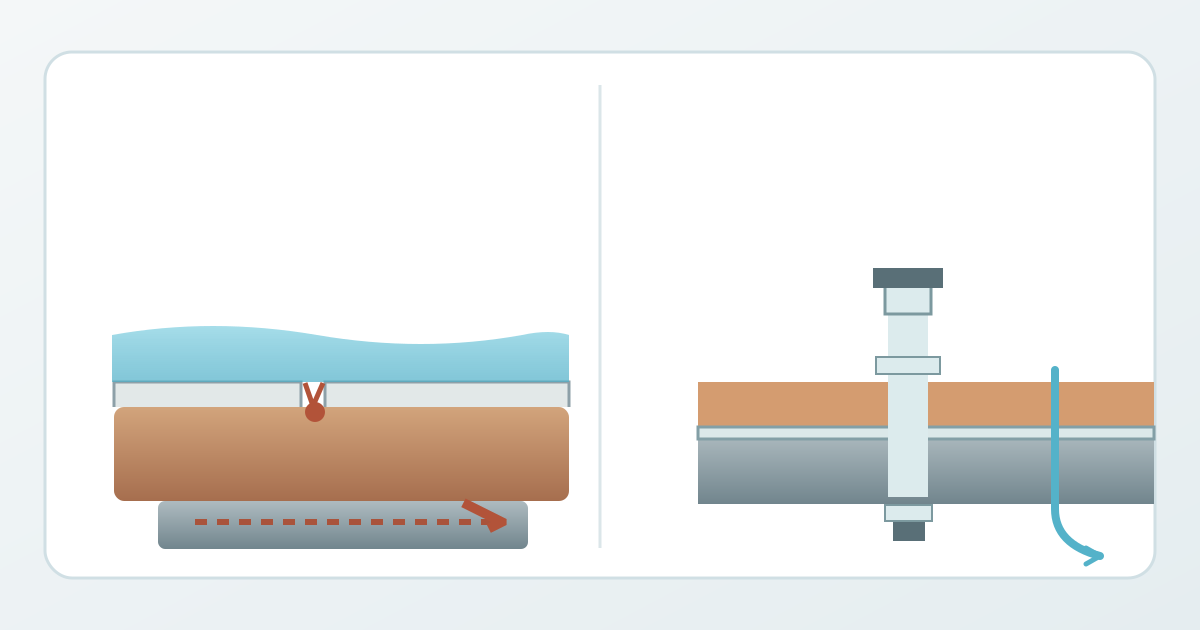
For electrical isolation, consider the mating faces, bolt shank, hole edges, washers, threads and any parallel connection. A complete design may need a compatible gasket, sleeve and washers, with resistance to compression, moisture, temperature and the operating chemicals. A washer by itself can cover a wet interface while leaving a metallic path through the bolt. Conductive fillers, damaged barriers or trapped metal swarf can also defeat the intended separation.
Required protective earthing and bonding must remain effective. Have the responsible electrical and structural designers resolve conflicts between safety continuity and corrosion isolation; do not remove a bonding conductor to cure corrosion.
Coating both members can reduce electrolyte access. Where a barrier coating protects only the anode, a scratch can expose a small anodic site against a large cathode. An appropriate cathodic-side coating can reduce the participating cathode area, but its extent and durability require design for the exposure. Specify preparation, edge coverage, installation-damage repair and inspection access. Paint is not proof of permanent electrical isolation.
Control water paths and copper-bearing runoff
Drain low points, avoid pockets and keep cleaning access to places where debris accumulates. Evaluate sealants for adhesion, movement and chemical compatibility; a failed seal can admit water and hinder drying. Shelter from direct rain can still leave condensation or salt deposits at a joint. Combine a drainage plan with the broader exposure assessment in coastal steel selection and outdoor steel selection .
Water flowing from copper onto zinc-coated steel introduces a separate route to trouble. Dissolved copper species can deposit copper on the less noble surface and create local cathodic sites. The original copper component need not have a metallic connection to the zinc component for this deposition scenario. That does not contradict the electrical-continuity requirement for the direct-contact couple described earlier: the new local couple forms at the deposited metal. Keep copper-bearing runoff away from susceptible downstream surfaces, rather than relying only on an insulating separator at the upstream joint.
Turn the mechanism into a reviewable decision
Record the actual alloys, coatings, wetted surfaces, metallic paths and expected wet periods on the connection drawing. Then identify which path each control interrupts, where damage could restore it and who will inspect that location. A small checklist tied to the assembly is more useful than an unqualified compatible/incompatible label.
For uncertain or consequential service, request testing that represents the proposed area ratio, coating defects, electrolyte, temperature and exposure cycle. ASTM G71-81(2024) covers conducting and evaluating galvanic tests in electrolytes under low-flow conditions. Its public scope does not turn a convenient laboratory exposure into a field-life prediction. Define the acceptance criteria and the limits of any extrapolation with the corrosion specialist.
During inspection, record where metal loss occurs, whether drains or barriers have changed, and whether a replacement fastener created a new material pair. Staining alone cannot identify the mechanism; distinguish actual substrate loss from deposits or transferred corrosion products. Use the findings to repair the circuit control and reassess remaining section where necessary. The technical references document the mechanisms and the limits of the supporting guidance.