
Coastal steel selection is mainly a corrosion-management problem. Salt carried by air can deposit on surfaces, and the risk increases when chloride remains wet or accumulates in sheltered details. The correct choice depends on the actual exposure, surface geometry, protection system and maintenance plan.
A site a similar distance from the sea can behave very differently depending on wind, surf, elevation, shelter, rainfall, orientation and local pollution. Use measured or classified exposure where available instead of relying on distance alone.
Quick selection framework
| Condition | Useful starting strategy | Critical checks |
|---|---|---|
| Rain-washed marine atmosphere | Qualified paint, galvanizing/duplex, or appropriately selected stainless | Chloride deposition, corrosivity, drainage, maintenance |
| Sheltered salt-retaining details | More robust protection and detail redesign | Crevices, deposits, cleaning access, fasteners |
| Architectural exposed stainless | Alloy and finish selected for actual chloride loading | Finish roughness, rain washing, cleaning, crevices |
| Splash/tidal or continuously wet zone | Separate marine-service assessment | Do not treat as ordinary atmospheric exposure |
Scroll within the table to see all columns →
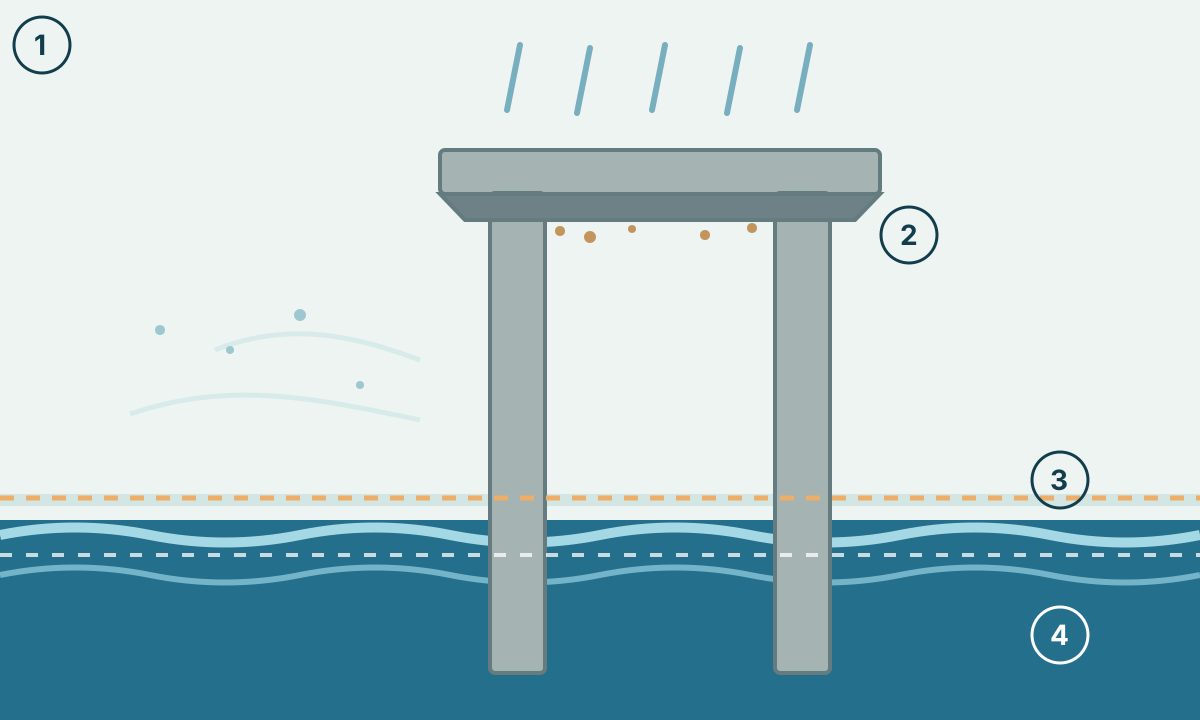
1. Define the coastal exposure
ISO 9223 classifies atmospheric corrosivity and identifies airborne salinity together with the temperature-humidity complex as important factors in atmospheric corrosion. ISO 12944-2 provides corrosivity categories used as an input to protective-paint selection.
For a real project, collect the best available information on:
- airborne salt or known marine exposure;
- how often surfaces become wet and how quickly they dry;
- direct rain washing versus sheltered surfaces;
- wind direction, surf/aerosol sources and local pollution;
- drainage, dirt retention and access for cleaning.
A broad label such as “near the coast” is not enough to specify a material system.
2. Separate atmospheric exposure from harsher marine zones
This guide is centered on atmospheric coastal exposure. Splash, tidal, submerged, buried and continuously wet interfaces can have different corrosion mechanisms and protection requirements. Treat those zones as separate design conditions.
A handrail exposed to salty air, a sheltered underside that stays damp and a member repeatedly hit by seawater should not automatically receive the same corrosion-control specification.
3. Painted carbon steel
A qualified paint system can protect carbon steel in coastal atmosphere when surface preparation, coating system, thickness, application quality and maintenance match the classified environment.
ISO 12944-5 gives guidance for protective paint systems within its scope. Select the complete system for the applicable corrosivity and durability requirement rather than choosing a topcoat name alone.
Pay particular attention to welds, edges, bolts, drainage paths and field repairs, where coating continuity can be harder to maintain.
4. Galvanized and duplex systems
Zinc coatings provide barrier and sacrificial protection. The governing standard depends on the product and process.
ISO 1461:2022 covers hot-dip galvanized coatings on fabricated articles within its scope and excludes continuously galvanized sheet and several other product families. ASTM A123/A123M is a common US specification route for hot-dip galvanized iron and steel products within its scope. Continuous sheet uses its applicable sheet-product standard.
In aggressive coastal atmosphere, a compatible organic coating over zinc can form a duplex system. Surface preparation, compatibility and repair details must be specified as one protection system.
5. Stainless steel
Stainless steel can reduce coating maintenance, but coastal exposure still requires selection by chloride loading, wetness, crevice geometry, surface finish, orientation and cleaning.
A smoother finish and regular natural or planned washing can reduce contaminant retention. Sheltered surfaces, rough finishes, tight crevices and salt-holding details increase localized-corrosion risk.
Do not convert a single coastal label into a universal stainless grade rule. Use the applicable material standard and project-specific corrosion assessment.
6. Weathering steel needs a cautious site check
Weathering steel depends on suitable wet/dry cycling to form a protective patina. Persistent chloride deposition, sheltered damp conditions or prolonged wetness can prevent the intended patina from performing well.
For coastal projects, do not select bare weathering steel by appearance alone. Confirm that the environmental conditions and governing guidance support its use.
7. Detail design often decides the outcome
Material selection and detailing should be reviewed together.
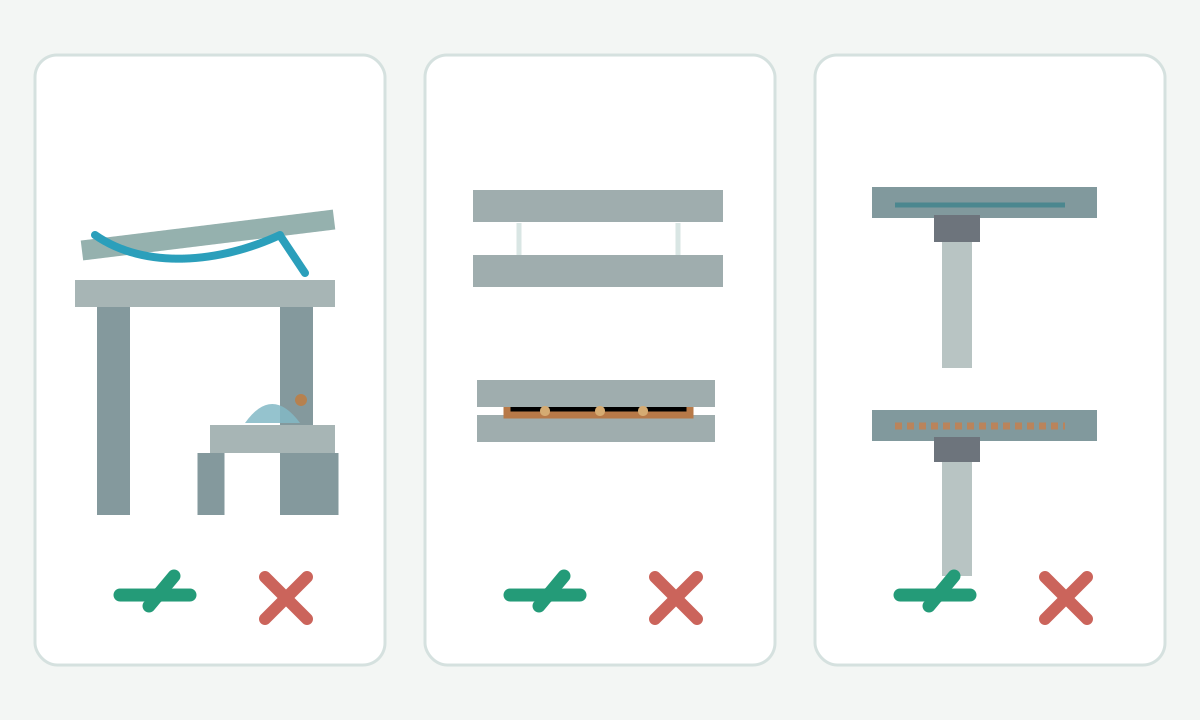
Prefer details that:
- drain and dry;
- avoid horizontal pockets and unsealed laps that trap salt water;
- allow inspection and cleaning;
- keep coating repairs accessible;
- use fasteners and dissimilar-metal interfaces that have been checked for the actual electrolyte exposure.
Galvanic corrosion risk depends on the material pair, electrical contact, electrolyte and relative exposed areas. A generic “stainless fastener is always safe” rule is inadequate.
8. Maintenance is part of coastal material selection
Coastal contaminants can accumulate over time, especially on sheltered surfaces. Define inspection frequency, cleaning or wash-down where appropriate, coating repair and acceptable appearance change.
A system that performs well with planned maintenance may be a better engineering choice than an expensive material that receives no inspection. The correct balance depends on consequence of corrosion, access and design life.
9. Specification checklist
Record:
- product form and governing product standard;
- site exposure/corrosivity basis;
- marine atmospheric versus splash/tidal/submerged zones;
- steel grade or stainless family/condition where specified;
- zinc/paint/duplex system and governing coating standards;
- surface preparation and finish;
- fastener and dissimilar-metal details;
- cut-edge, weld and field-repair requirements;
- inspection, cleaning and maintenance plan.
For broader outdoor selection before the coastal-specific step, see How to Choose Steel for Outdoor Use .