
Atmospheric corrosion categories C1, C2, C3, C4, C5 and CX rank how aggressively an atmosphere attacks reference metals. C1 is very low and CX extreme. Their classification basis is the first year of attack on standard metal specimens. A category alone supplies neither a paint recipe nor a guaranteed service life.
What the six categories describe
The sequence is C1 very low, C2 low, C3 medium, C4 high, C5 very high and CX extreme. Descriptions such as rural, industrial or marine help frame an assessment; the site evidence still determines the category. A warehouse can contain both a dry office and a repeatedly wet loading bay. A location-wide label can conceal these different exposures.
| Category | Severity | Question to keep in the record |
|---|---|---|
| C1 | Very low | Does the surface stay dry during actual use? |
| C2 | Low | Could intermittent condensation change the assessment? |
| C3 | Medium | What measured or estimated evidence supports the middle band? |
| C4 | High | Which wetting and contamination conditions were assessed? |
| C5 | Very high | Are the particularly aggressive local details documented? |
| CX | Extreme | Does the assessment address extreme exposure and the relevant system scope? |
Scroll within the table to see all columns →
The questions are editorial prompts, not category-assignment criteria. Consult the applicable standard for the complete numerical limits.
The distinction between C5 and CX matters in severe exposure. An offshore location deserves a specific assessment; the word offshore alone does not establish every surface’s category. Older specifications may contain C5-I and C5-M. Record their edition and reassess the service conditions before interpreting them against current C5/CX terminology.
Read first-year loss with the metal and units
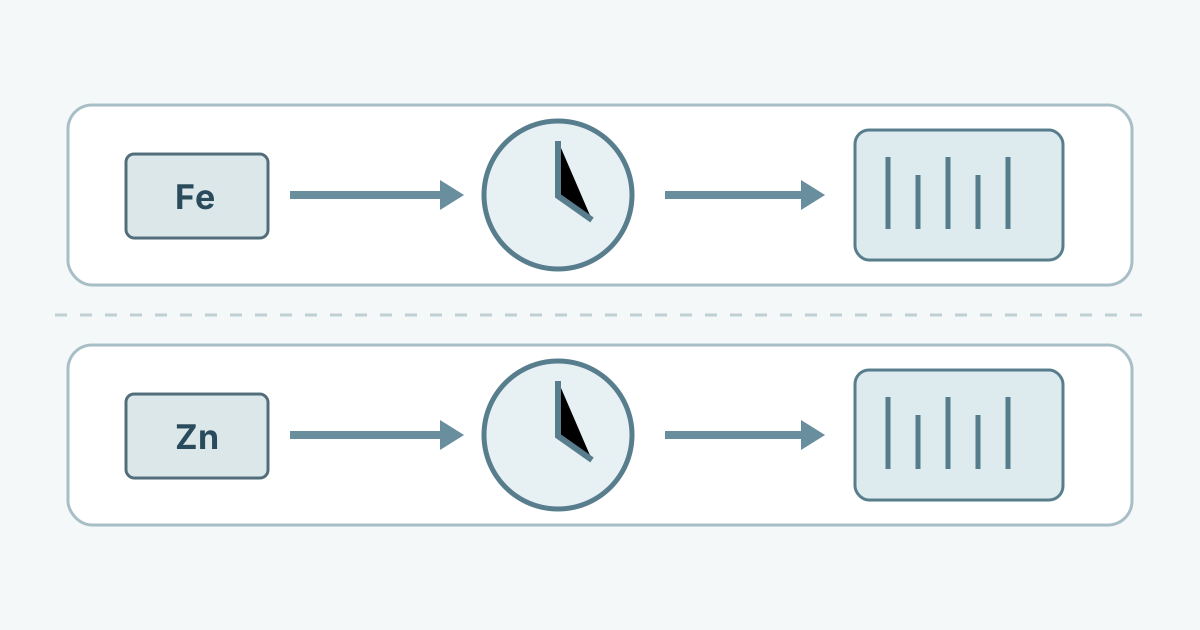
Classification uses first-year corrosion of standard specimens. Report the reference metal, exposure period, measured loss and method together. Carbon steel and zinc have different category boundaries. Applying a carbon-steel limit to a zinc result can produce a plausible-looking but meaningless label.
As a limited numerical illustration, a carbon-steel loss of 40 µm during the first year lies within C3’s interval of more than 25 through 50 µm. A zinc loss of 1 µm during the first year also falls in C3, whose zinc interval is more than 0.7 through 2.1 µm. The two examples explain the metal-specific scales; they are invented measurements and do not describe a particular site. At a boundary, preserve the standard’s inequality signs; a value of exactly 50 µm is within this carbon-steel C3 interval. One micrometre equals 0.001 mm, so 40 µm equals 0.040 mm. These figures represent average loss of metal over the exposed area; localized pit depth requires a separate measurement.
Measurement and estimation carry different evidence
ISO 9226 provides specimen methods for evaluating atmospheric corrosivity. A field programme should document specimen identity, location, orientation, dates and the measurement procedure, including removal of corrosion products for mass-loss evaluation. A photograph of rust, a short salt-spray test or a paint manufacturer’s category claim cannot establish a measured first-year atmospheric category.
ISO 9223 also provides a calculation route using environmental data and an informative route based on local conditions. Its key inputs include temperature and humidity, airborne salt and sulfur dioxide. Record which route was used and what data represent the actual surface. A measured category and a provisional desk estimate should remain distinguishable in the project record.
For sheltered surfaces, inspect where water and deposits remain. The external weather station may miss a damp overlap or recurring condensation beneath a roof. Where local chemical process exposure falls outside the standard’s atmospheric scope, obtain a separate assessment and document its limits separately.
ISO 9223 and ISO 12944 answer different questions
ISO 9223:2012 addresses atmospheric corrosivity classification, determination and estimation. ISO 12944-2:2017 places environmental classification within protection of steel structures by paint systems and separately addresses immersed or buried exposure. ISO’s public catalogue lists both editions as current published editions on 15 October 2026; 12944-2 is also marked for revision, with a working draft under development. Specify the edition required by the contract and check for a replacement when issuing the specification.
A painted structure also needs an appropriate substrate, surface preparation, system specification, application control and inspection. Part 5’s published scope excludes CX and Im4. Part 9 addresses offshore and related structures within its own scope. A marketing phrase such as “C5 paint” leaves too much unspecified to select a complete system.
Keep durability, immersion and warranties separate
In a designation such as C4-H, C4 describes atmospheric severity and H describes the specified paint-system durability range. Durability supports maintenance planning; a contractual warranty has its own terms. Neither establishes the remaining load-bearing life of a steel member.
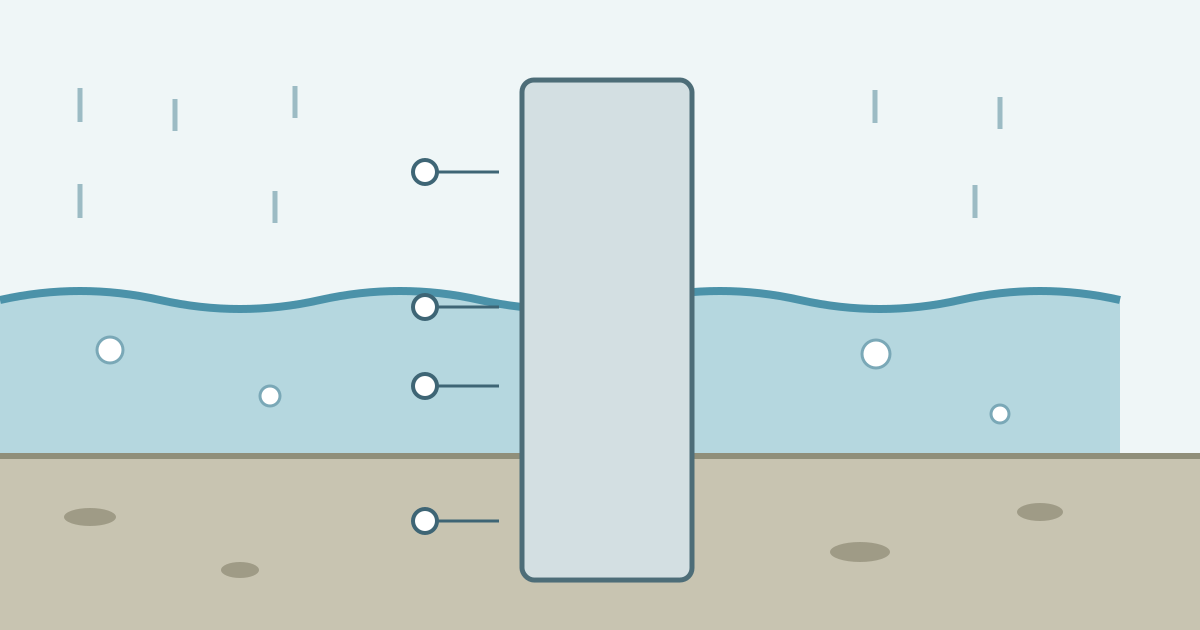
Immersion categories use the Im prefix. A submerged member does not become CX simply because exposure is severe. Splash, tidal and atmospheric zones on the same structure may require separate treatment. Identify water exposure and any cathodic protection when determining the applicable classification and system requirements.
Why first-year loss cannot simply predict coating life
Dividing an available zinc thickness by a first-year loss produces an arithmetic quotient. Treating that quotient as years of service assumes a constant loss rate, uniformly available coating and a defined failure criterion. Actual surface films, wetting, damage and local conditions can change the loss history. A category also spans a range, so its label cannot supply one precise rate.
ISO 9224 provides guidance for exposure beyond one year in conjunction with ISO 9223. The American Galvanizers Association additionally explains why its North American time-to-first-maintenance environments do not map directly to ISO category names. Use a prediction method that fits the material and service, with stated assumptions and inspection criteria. The galvanized-steel rust explanation covers the distinction between zinc corrosion products and exposed-steel rust.
What a usable classification record contains
A useful entry might read: “External atmospheric exposure, assessed as C3 for carbon steel using the stated method and site data; assessment date and applicable standard edition recorded; sheltered wet details assessed separately.” Add the evidence and uncertainty behind the entry. Keep any coating system, durability target and maintenance plan in identifiable fields.
Before accepting that record, ask whether it identifies the surface being assessed, whether the reference metal matches the limits, whether the observation period is adequate, and whether immersion or unusual chemicals need separate treatment. The coastal and outdoor steel selection guides take the next step from exposure assessment to material and protective-system decisions.
Sources and checked standard editions support the category basis, numerical example and scope limits.