
Steel does not have one universal melting point. A steel grade contains iron plus carbon and, often, other alloying elements, so heating normally crosses a temperature interval between the solidus and liquidus. The exact interval depends on chemistry and phase relationships.
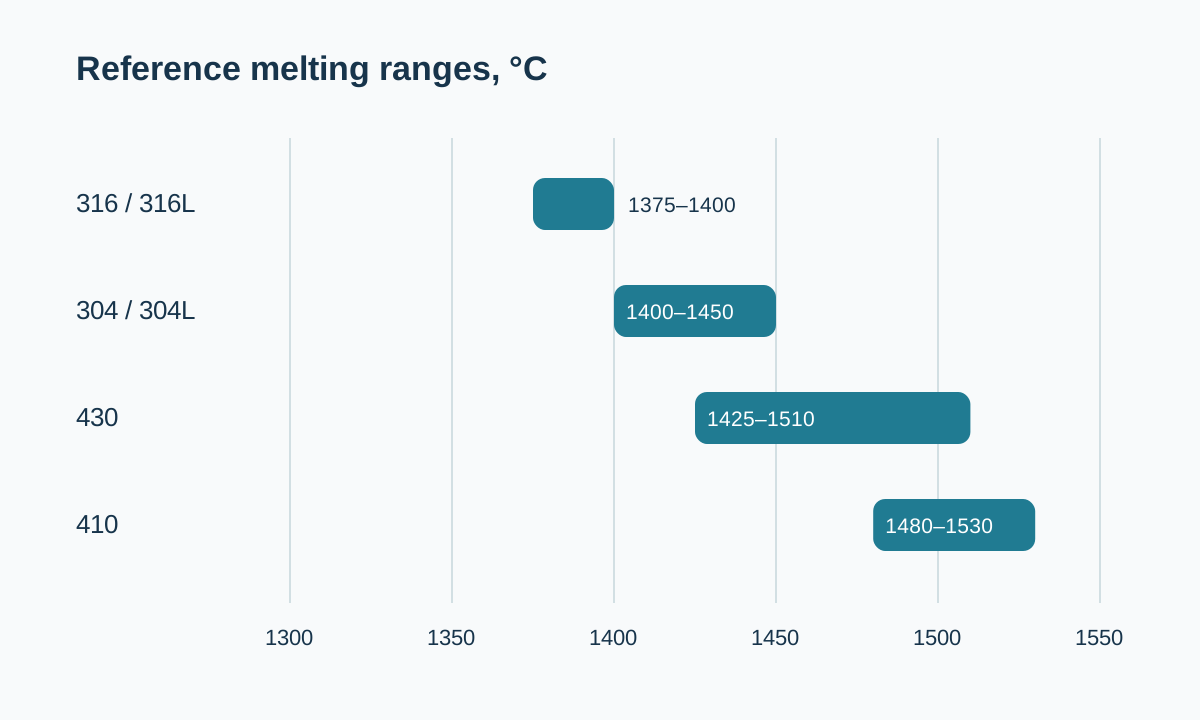
For practical reference, common stainless grades span noticeably different ranges. The British Stainless Steel Association lists 304/304L at about 1400–1450°C and 316/316L at about 1375–1400°C. Carbon steels also have composition-dependent solidus and liquidus temperatures, so a grade-specific value or phase calculation is preferable whenever process control depends on temperature.
Quick reference
| Material or grade | Reference melting behavior | Engineering note |
|---|---|---|
| Pure iron | About 1535–1538°C | Elemental reference; steel contains additional elements |
| 304 / 304L stainless | 1400–1450°C | BSSA/ASM handbook range |
| 316 / 316L stainless | 1375–1400°C | BSSA/ASM handbook range |
| 430 stainless | 1425–1510°C | BSSA/ASM handbook range |
| 410 stainless | 1480–1530°C | BSSA/ASM handbook range |
Scroll within the table to see all columns →
These values are useful references. They are not guaranteed heat-specific limits for every commercial product.
Melting point or melting range?
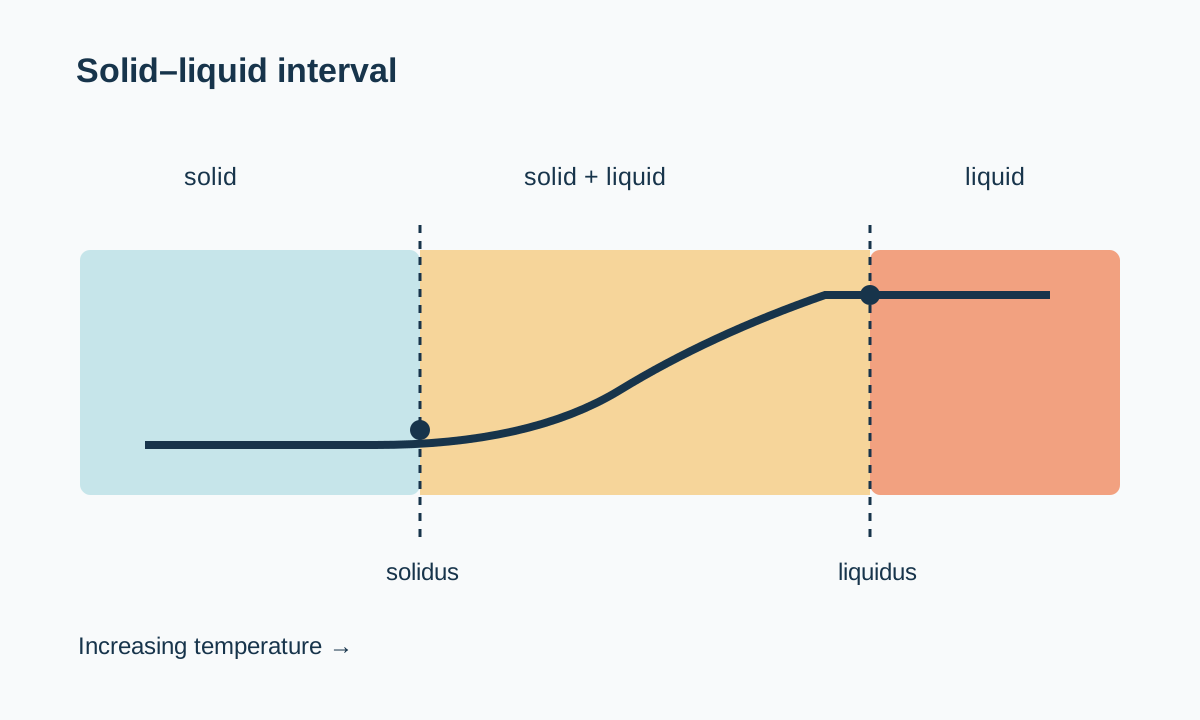
A pure element can undergo equilibrium melting at a defined temperature at a given pressure. A commercial steel is a multicomponent alloy. As it is heated, the first liquid can appear at the solidus. Between solidus and liquidus, solid and liquid phases can coexist. At the liquidus, the alloy is fully liquid under the relevant equilibrium description.
That distinction matters in steelmaking, casting, welding simulation and thermal processing. A statement such as “steel melts at 1500°C” is too coarse for work that depends on the onset of melting or complete liquefaction.
Why composition changes the range
The Fe-C system is the foundation for understanding carbon steels. Carbon changes phase stability and shifts the temperatures at which phases form or disappear. Commercial steels also contain manganese, silicon, chromium, nickel, molybdenum and other elements in grade-dependent amounts. Their combined effect changes solidification behavior further.
This is why a broad label such as carbon steel, stainless steel, tool steel or alloy steel cannot supply one exact melting temperature. Two steels with similar room-temperature strength may have different high-temperature phase behavior because chemistry is different.
For a heat-treatment or melting calculation, use the actual grade chemistry and a qualified data source, thermodynamic calculation, producer data or process specification.
Typical stainless-steel melting ranges
BSSA publishes the following handbook ranges for several widely used stainless grades:
| Stainless grade | Melting range, °C | Approximate °F |
|---|---|---|
| 316 / 316L | 1375–1400 | 2507–2552 |
| 304 / 304L | 1400–1450 | 2552–2642 |
| 321 / 347 | 1400–1425 | 2552–2597 |
| 17-4PH | 1400–1440 | 2552–2624 |
| 430 | 1425–1510 | 2597–2750 |
| 410 | 1480–1530 | 2696–2786 |
Scroll within the table to see all columns →
The table shows why a single stainless-steel melting point is misleading. Even grades in the same broad family can have different solidus-liquidus intervals.
What about carbon steel?
Carbon steel also melts over a composition-dependent interval. The Fe-C phase diagram shows why carbon content changes phase boundaries, while manganese and other residual or deliberate additions modify the real commercial alloy.
A useful engineering workflow is:
- identify the exact grade or heat chemistry;
- determine whether the task needs the first-liquid temperature, complete-liquid temperature, or a processing temperature;
- use the governing producer/process data or a validated thermodynamic source;
- keep the assumed composition and pressure with the result.
For general education, pure iron near 1538°C can serve as a reference point. It should not be copied into a specification as the melting point of every carbon steel.
Melting range and service temperature answer different questions
A component can lose stiffness, yield strength, oxidation resistance or dimensional stability at temperatures far below its melting range. High-temperature design therefore uses elevated-temperature material data and the applicable design code.
BSSA gives a clear stainless example: 304 and 310 can share a similar reported melting range, yet their recommended maximum service temperatures in air differ because oxidation resistance and elevated-temperature behavior depend on alloy chemistry and microstructure.
For furnaces, exhaust systems, pressure equipment or fire design, use the property required by the design method. Melting temperature alone is not a safe service-temperature criterion.
Welding and casting implications
A welding arc locally produces a molten pool. The adjacent heat-affected zone remains unmelted while its microstructure and properties can change during the thermal cycle. Solidification range can influence segregation and cracking behavior, so welding metallurgy uses more information than a nominal melting temperature.
Steelmaking and casting also require temperatures above the liquidus to provide sufficient superheat for transport, flow and controlled solidification. The required superheat depends on the process, section, chemistry and equipment. A generic melting-point number cannot define a tapping or pouring temperature.
How to read a melting-temperature claim
When a datasheet or web table gives “melting point of steel,” check:
- whether it refers to a specific grade;
- whether the value is a solidus, liquidus, midpoint or broad range;
- whether the source is measured, handbook data or calculated;
- whether the chemistry or material standard is stated;
- whether the value is being confused with a service-temperature limit.
For procurement and engineering records, preserve the grade, product condition and source with the temperature value.
Source for the stainless ranges: BSSA / ASM.