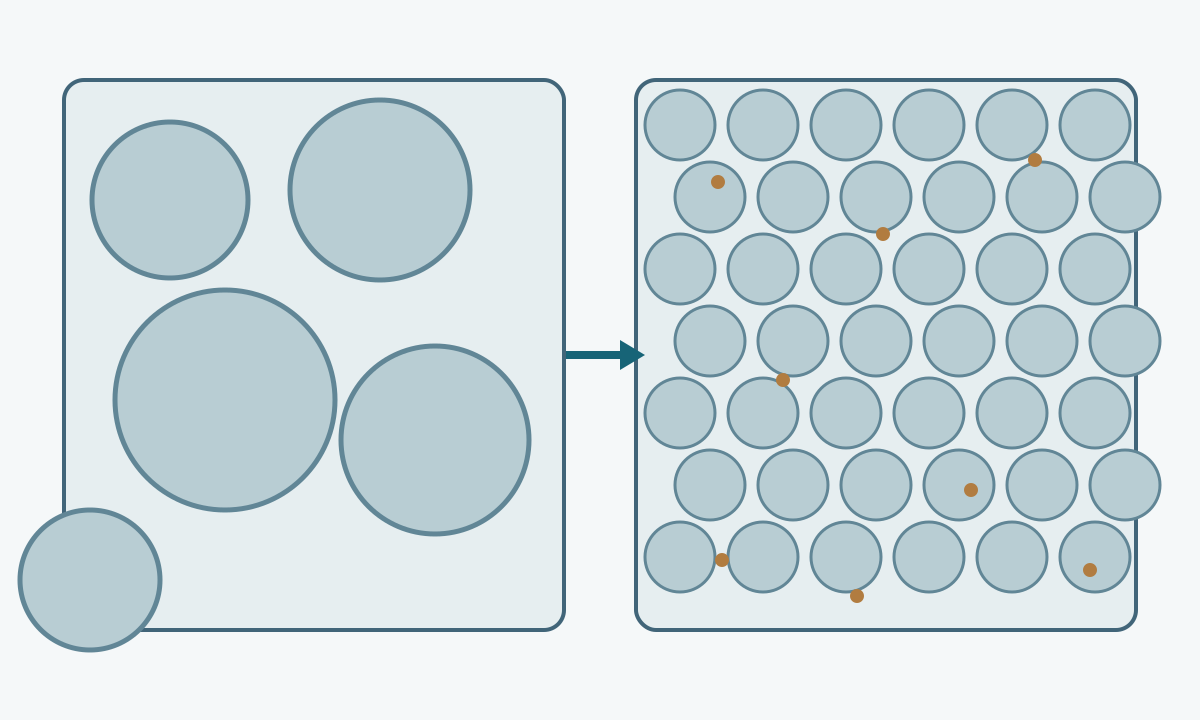
High-strength low-alloy steel, usually shortened to HSLA steel, is a broad group engineered to provide higher strength with relatively modest alloy additions and controlled processing. The label describes a material strategy. A usable specification still needs a standard, grade, product form, thickness and delivery condition. Many HSLA products obtain strength through grain refinement, precipitation strengthening and controlled rolling or thermomechanical processing. Niobium/columbium, vanadium and titanium are common microalloying elements in relevant grade families, within the limits of the governing specification.
How HSLA steel gains strength
Steel strength can be raised through carbon, alloying, cold work, heat treatment and microstructural control. HSLA grades often emphasize fine grain size and small precipitates so useful strength can be obtained without relying on high carbon content. ArcelorMittal describes its automotive HSLA range as strengthened by precipitation and grain-size refinement. The exact balance changes with grade, thickness and processing route.
| Specification or family | Product context | What to verify |
|---|---|---|
| ASTM A572/A572M-25 | Structural shapes, plates, sheet piling and bars within scope | Grades 42 [290], 50 [345], 55 [380], 60 [415], 65 [450] |
| ASTM A656/A656M-24 | Hot-rolled structural plate with improved formability | Grades 50, 60, 70, 80, 100; maximum thickness depends on grade |
| EN 10149-2 product example | Hot-rolled high-yield-strength steel for cold forming | Products such as S650MC require the applicable standard and producer limits |
| Producer HSLA ranges | Automotive and fabricated components | Strength, thickness, forming limits and surface options |
Scroll within the table to see all columns →
The A572 grade pairs use ksi [MPa] yield-strength designations. ASTM treats the unit systems separately; use one system consistently. ASTM A572/A572M and A656/A656M address different products. A strength number alone never defines the whole product. ## Strength does not remove stiffness and stability limits Higher yield strength can allow a lighter component when design is strength-controlled. Deflection, local and global buckling, vibration, fatigue, connection behavior and minimum practical thickness can limit the reduction. Elastic modulus changes much less than yield strength across ordinary structural steel families. A direct rule such as “twice the yield strength means half the thickness” is invalid in general. Verify the actual grade and thickness under the governing design code. ## Formability is grade- and thickness-specific HSLA does not guarantee one bend radius, elongation or forming limit. Strength level, thickness, rolling direction, edge condition and production route all affect forming. ASTM A656/A656M explicitly targets improved formability within its scope. Automotive HSLA ranges also publish grade-specific dimensional and mechanical windows. ## Welding remains a grade-level decision Many HSLA grades use relatively low carbon and modest alloy additions, supporting practical weldability. Procedure requirements still depend on chemistry, applicable carbon-equivalent method, thickness, heat input, restraint, hydrogen management, filler selection, toughness and service. For A572/A572M applications where notch toughness matters, the purchaser and producer must agree on the notch-toughness requirements. ## HSLA does not automatically mean corrosion-resistant The HSLA label describes strength and alloy strategy. It does not establish atmospheric corrosion resistance. Many grades still need paint, metallic coating or another corrosion-control system in wet service. Special weathering performance must be confirmed by the material standard and grade. ## How to specify HSLA steel State the governing standard and edition, complete grade, product form, thickness or section size, tolerances, delivery condition, required mechanical/toughness tests, surface or coating system, fabrication-critical requirements and certification/traceability.