
ASTM A36/A36M is a widely used structural carbon-steel specification for shapes, plates and bars. ASTM currently lists A36/A36M-19 as Active. The specification covers structural-quality material for general structural purposes within its stated scope.
The familiar “36” is associated with a common minimum yield-strength level of 36 ksi in the inch-pound system for many A36 products and sizes. Compliance still depends on the complete A36/A36M requirements, product form, size or thickness, test results and the general requirements that apply through ASTM A6/A6M.
ASTM A36 at a glance
| Item | Practical reading |
|---|---|
| Standard | ASTM A36/A36M-19, currently listed Active by ASTM |
| Material family | Carbon structural steel |
| Main product forms in scope | Shapes, plates and bars |
| Common strength reference | 36 ksi minimum yield level for many common products/sizes; check the applicable table |
| Producer example | SSAB A36 plate data list 36 ksi minimum yield and 58–80 ksi tensile over the stated 0.100–6.00 in plate range |
| General requirements | ASTM A6/A6M applies where referenced |
| Units | Inch-pound and SI systems are separate standard systems in A36/A36M |
Scroll within the table to see all columns →
A36 is easy to recognize, while the designation still needs its specification context. Product form, thickness, dimensions, testing and order requirements remain part of the engineering definition.
What ASTM A36 actually identifies
ASTM A36/A36M is a product specification for carbon structural steel. It defines requirements for material supplied as structural shapes, plates and bars within its scope. The designation carries product and acceptance context in addition to the material family.
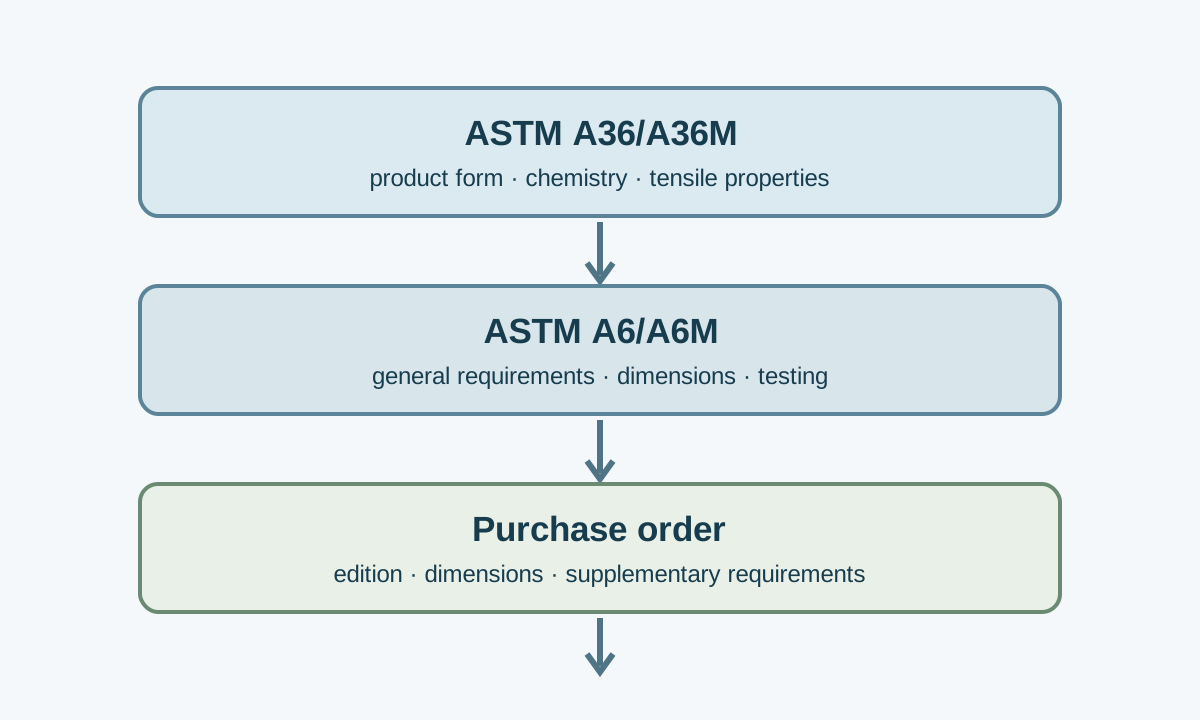
ASTM A6/A6M supplies general requirements for rolled structural steel bars, plates, shapes and sheet piling. Those general requirements cover manufacture, dimensions, testing, marking and related acceptance provisions referenced by the product specifications.
A useful purchase description normally combines:
- ASTM A36/A36M and the contractual edition;
- product form;
- dimensions and tolerances;
- quantity;
- supplementary testing or restrictions required by the purchaser;
- inspection and certification requirements;
- fabrication-critical requirements where applicable.
Mechanical properties: read strength with product and size
A36 is widely associated with a 36 ksi minimum yield-strength level in the inch-pound system. ASTM A36/A36M also uses an SI system whose specified values are stated separately. ASTM explicitly warns that the inch-pound and SI values are not exact equivalents and that each system is to be used independently.
This matters in certificates and specifications. Converting 36 ksi mathematically gives about 248 MPa, while the SI specification commonly uses 250 MPa. A compliance decision should follow the unit system selected by the governing specification, without mixing converted values from the other system.
As a current producer example, SSAB lists the following for its A36 plate offering from 0.100 to 6.00 in (2.54 to 152 mm):
- minimum yield strength: 36 ksi;
- tensile strength: 58–80 ksi;
- elongation: 21% in 2 in and 18% in 8 in, with stated adjustments for wider material and ASTM A6 provisions.
Those values explain a common plate supply. They do not create a universal table for every A36 shape, bar or thickness. For procurement, read the applicable A36/A36M requirement for the actual product.
Composition: why product context matters
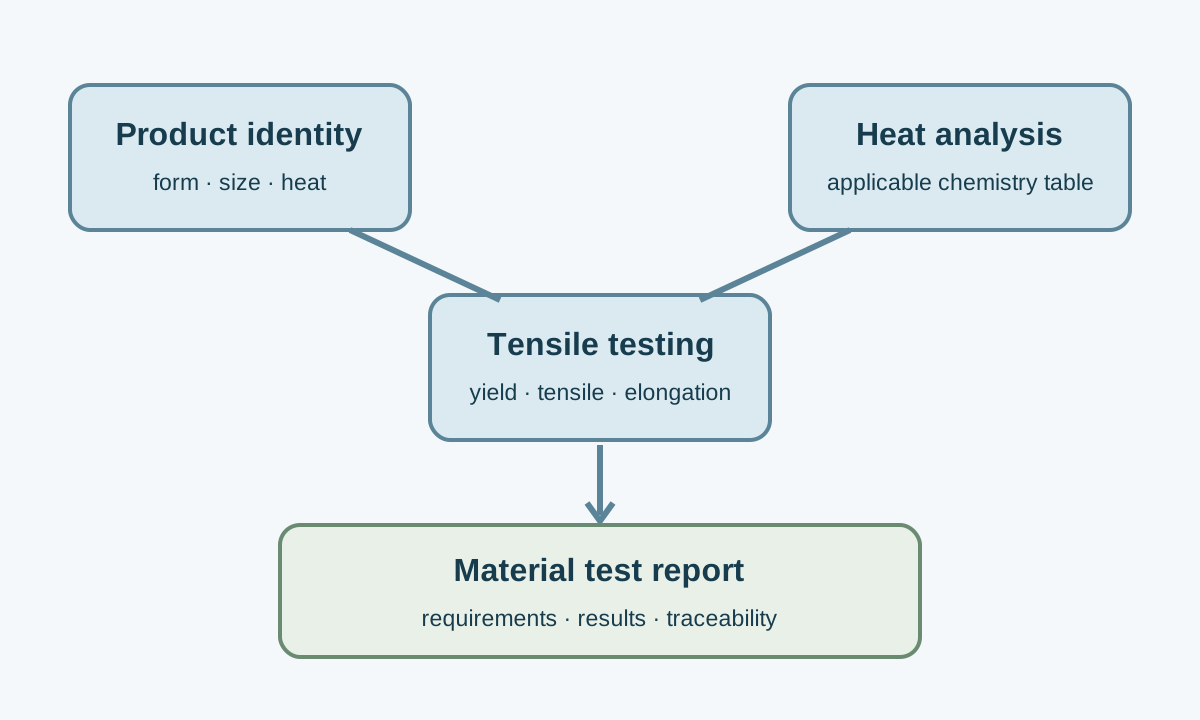
A36 is a structural product specification, so chemistry requirements are tied to the product and applicable table. ASTM’s public abstract identifies carbon, manganese, phosphorus, sulfur, silicon and copper among the elements addressed by heat analysis.
A web table that gives one fixed maximum for each element without product-form or thickness context can create a false impression of universality. For an actual order or material review:
- identify whether the product is plate, shape or bar;
- identify size or thickness;
- read the applicable A36/A36M chemistry table and notes;
- compare the heat analysis on the material test report;
- apply any product-analysis or general-requirement provisions when relevant.
A36 follows a different designation logic from an SAE composition designation such as 1020. Material substitutions should be compared through their complete specifications.
Product forms and coil considerations
The ASTM scope centers on structural shapes, plates and bars. A producer may sell coil for later conversion, with final qualification dependent on the applicable product route and testing.
SSAB distinguishes coil for conversion from fully qualified plate in its public A36 information and notes that coils are excluded from final A36 qualification until processed and tested. For buyers, the delivered product needs the required downstream qualification.
When ordering flat material, state whether the purchase is plate, cut-to-length product or another form and confirm how the supplier certifies it.
Fabrication and joining
ASTM A36/A36M requires fabrication practices appropriate to the material and intended service. For joined structural work, the applicable fabrication standard and qualified project procedure control the detailed parameters.
Thickness, restraint, ambient conditions, joining process and joint design can change the required controls. Use the project procedure and governing fabrication standard instead of a blanket rule.
A36 and international grades
A36 is frequently compared with structural grades from EN, JIS and other systems. Similar nominal strength provides an initial comparison point. A substitution review should compare:
- product standard and edition;
- product form and thickness;
- chemical limits;
- yield and tensile requirements;
- elongation;
- impact-toughness requirements;
- dimensional and surface requirements;
- testing and certification;
- delivery condition;
- project or design-code acceptance.
For example, an EN grade carrying a JR impact designation includes a defined impact-quality requirement in its own standard system. A36 material needs review against the project’s complete requirement.
Common applications
Within its standard scope and project design requirements, A36 is widely used for structural plates, base plates, brackets, connection parts and general fabricated structures.
The final application is controlled by structural design, section selection, connection design, fabrication quality, corrosion protection and any project-specific toughness or inspection requirements.
How to specify A36 in a purchase order
A stronger order description includes ASTM A36/A36M with the required edition if contractually controlled, product form and dimensions, ASTM A6/A6M requirements where applicable, quantity, dimensional or surface conditions, supplementary requirements, material test report requirements, and any special fabrication, coating or traceability provisions.
How to read an A36 material test report
Check:
- specification and edition;
- grade/product identity;
- heat or lot traceability;
- product form and size;
- heat-analysis chemistry against the applicable table;
- yield strength, tensile strength and elongation against the correct product/size requirements;
- supplementary test results required by the order;
- certificate issuer and traceability to the delivered material.
A test value gains engineering meaning from its specification context. Keep the MTR linked to the actual heat and product supplied.