
A steel coil can change condition between receipt and processing. Preserve its identity, the protection intended for that product and a record of changes during storage. A released receiving record is the starting point; it does not establish that later storage or handling has preserved the coil.
This guide covers that interval. Use the delivery inspection guide for arrival checks and the coil specification guide for the ordered dimensions and mass. Storage arrangements and moves require the site’s competent assessment and approved procedures; this article provides no rigging, band-removal or stacking instructions.
1. Open a storage record after receipt
Carry the coil identifier and receiving status into the warehouse record. Link the supplier’s product instructions, packaging description, assigned location and any unresolved restriction. Record who owns preservation checks and where their findings will be kept. Keep the physical label and the inventory identity connected when a package changes.
Distinguish the supplier’s original information from observations made on site. An unknown packaging specification stays unknown until clarified. Do not interpret an intact wrapper as confirmation of an unstated storage duration or exposure allowance.
2. Establish what the packaging protects
Packaging may combine surface protection, moisture protection, edge protection and restraint. Record the stated purpose of the supplied arrangement and its limitations for the particular product. Transit protection alone does not establish suitable storage protection, as BlueScope’s product guidance explains.
Before changing protection, obtain the applicable supplier instructions and site approval. Record the reason, responsible person and approved replacement arrangement. A proposed cover, oil or other treatment needs product-specific review, including any effect on subsequent processing. Do not improvise repairs to damaged restraints or use packaging bands as lifting points.

3. Track the environment and its changes
Record the storage conditions required by the supplier and the site’s method of checking them. Cold steel entering warmer humid conditions can develop condensation; Salzgitter discusses this risk in its packaging guidance . A dry-looking outer surface provides limited evidence about hidden wraps.
Flag roof leaks, wet packaging, unexpected temperature transitions and interrupted environmental control for assessment. Keep the observation time, affected coil identities and examination limits. Follow the product instructions for any protective action; this guide sets no universal humidity limit, acclimation time or storage life.
4. Use a preservation record that can be handed over
The following fields make changes visible across shifts. Check frequency should follow the site risk assessment, product instructions and actual events. Add an event-triggered review when conditions change.
| Field | Evidence to retain | When to reopen |
|---|---|---|
| Identity and status | Coil identifier, receiving record and current restrictions | Relabelling, split or partial use |
| Packaging | Supplier instruction revision and observed protection condition | Damage or a proposed protection change |
| Environment | Required conditions, observations and examination limits | Leak, wetness or unexpected transition |
| Location and support | Assigned location and approved arrangement reference | Move or changed coil geometry |
| Decision | Finding, owner, approved action and closure evidence | New evidence or an unresolved restriction |
Scroll within the table to see all columns →
An entry should separate observation, proposed action and authorized decision. “Checked” without a location, finding or named reviewer leaves the next shift unable to determine what was assessed. Record inaccessible or unexamined areas explicitly.
5. Reassess internal moves and part-used coils
A move to another bay can change the support arrangement or exposure. Give the responsible team the current coil identity, condition, dimensions and mass basis, together with the destination and applicable restrictions. HSE’s storage guidance addresses storage suitability for intended loads; use the site’s verified arrangements and trained personnel.
After partial use, update the remaining-coil identity and the available mass and dimension information. Record how those values were obtained. SSAB’s GreenCoat guidance identifies changed support fit as a concern for partially used coils. Have the responsible specialist confirm the return-to-storage arrangement for the actual product; the original shipping configuration cannot simply be assumed suitable.
If winding, restraint, support or condition is uncertain, refer the issue for competent assessment before further handling under the site’s procedure. Never test stability by moving the coil or removing a band.
6. Close changes before the next handover
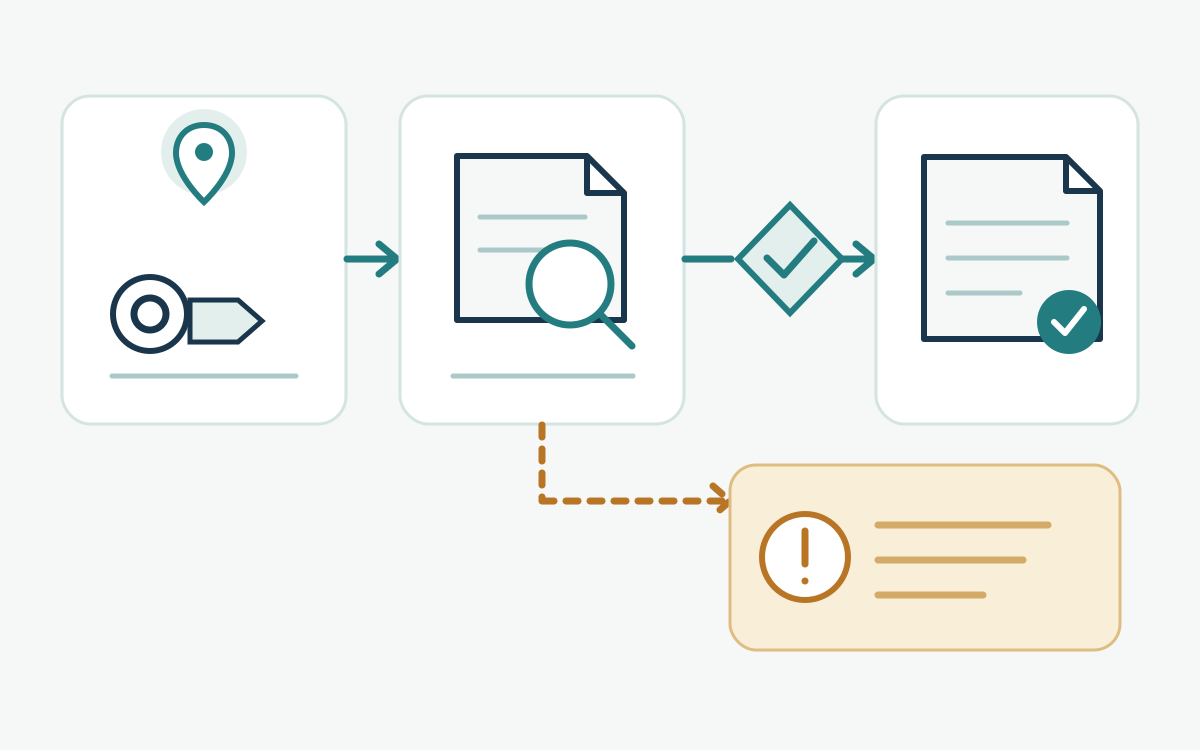
Consider a hypothetical coil moved from a dry bay after a nearby leak. Its outer wrapping looks dry, while the underside was inaccessible. The record should retain the location change and limited examination, identify who will assess exposure and carry any restrictions forward. A clean photograph cannot close the unknown condition.
For each change, retain the previous record, new evidence, authorized disposition and updated location or protection details. Hand the processing team the same current identity and unresolved restrictions. When evidence is missing, leave the affected decision open and name the person responsible for resolving it.