
Specify coil ID, maximum OD, strip width and net mass as a coordinated supply window for each delivered coil. Start from verified limits for the actual receiving line and handling route, then ask the supplier to confirm the same fields. A familiar inside diameter or an acceptable total order weight does not establish that every coil can be received and processed.
This guide deals with that equipment-to-order handoff. Use the complete purchase specification guide for grade, coating and other product requirements; the steel coil overview explains the supply form. Neither a catalogue example nor this article approves a loading arrangement.
1. Identify where each limit comes from
List the equipment and handling stages through which the supplied coil must pass. Obtain the applicable limits from controlled machine documentation and the responsible site personnel. Record the machine or arrangement identity, document revision and any conditions attached to the limit. A remembered value for a similar line is not a verified capacity for this one.
MECON identifies dimensions, mass and handling capacity as distinct planning inputs; its catalogue is background guidance, not your machine approval . Dimeco’s published range covers multiple solutions. Do not combine the highest values from a product-family summary into the assumed simultaneous rating of one installed machine.
Ask the relevant equipment or handling specialist to resolve missing, conditional or conflicting limits. This is a purchasing workflow, not a procedure for lifting coils, removing restraints, modifying mandrels or testing a machine beyond its approved conditions. Do not perform those operations to find out whether an offered coil fits.
2. Write a deliverable range for every coil
For inside diameter, state the agreed dimension or permitted range and its unit. Distinguish the delivered coil bore from a machine component’s nominal dimension. If the supplier proposes another bore, obtain technical confirmation for the exact receiving arrangement before accepting the change; do not assume that an accessory or adjustment makes it compatible.
For outside diameter, make the maximum explicit. If a lower bound matters to the approved arrangement or production plan, record that separately rather than leaving it implied. Specify strip width together with its agreed tolerance and edge basis; a nominal width on its own does not describe the full delivered width range. The width and tolerance explanation covers that distinction.
Mark every value as a target, a firm boundary or an unresolved proposal. Keep the governing unit clear, and label any conversion as a communication aid unless it is expressly agreed as the ordering basis. Do not round a converted upper limit upward and silently enlarge the permitted window.
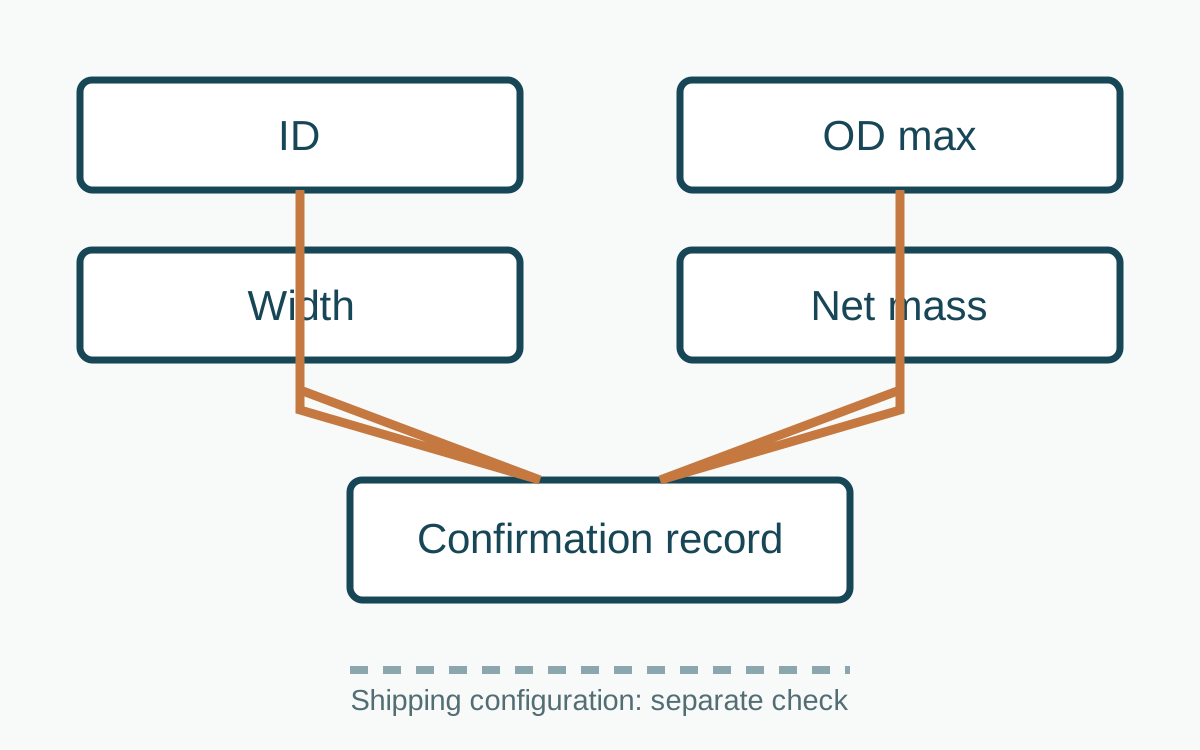
3. Separate net mass, handling load and order quantity
State maximum net mass per coil independently of the total quantity ordered. Where a minimum per-coil mass is commercially or operationally important, agree it as a separate requirement. A supplier’s typical coil mass is not a promise that every delivered coil will meet an upper bound.
The load presented to a handling operation can include packaging or supporting items as well as the steel. Have the responsible site person confirm which components count against the relevant capacity and how the shipping configuration will be assessed. Do not relabel a net-steel figure as gross handling load, and do not treat this article as a lifting-capacity calculation.
Keep total order mass and proposed coil count in their own fields. Many small coils and fewer large coils may meet the same total quantity while presenting different receiving constraints. Ask for the proposed per-coil supply range rather than relying on an average derived from total mass divided by coil count.
4. Compare requirements with the actual offer
Use a comparison record in which the supplier’s answer sits beside the buyer’s requirement, not in a separate unconnected quotation note. Preserve the origin of each requirement and assign a named owner to every difference. The following is a field structure, not a ready-to-order set of limits.
| Field | Buyer requirement and source | Supplier response and difference owner |
|---|---|---|
| Inside diameter | Agreed bore/range, unit and receiving-arrangement reference | Confirm the supplied bore; identify any alternative and reviewer |
| Outside diameter | Explicit maximum; separate minimum if applicable | Confirm the proposed range and flag any conditional value |
| Strip width | Nominal width, tolerance and edge basis | Confirm the same basis; identify substitutions |
| Net mass per coil | Maximum and any agreed minimum, with unit | State the delivered range, not only a typical or average mass |
| Handling load basis | Site-confirmed included components and configuration | Provide the relevant packaging/support information and open points |
| Order quantity | Total mass or other agreed quantity; proposed coil count | Keep total quantity separate from per-coil conformity |
Scroll within the table to see all columns →
A blank response remains open; it is not acceptance. If the offer uses a different unit, basis or condition, show the comparison explicitly and have the appropriate owner resolve it. Keep the original offer and the agreed revision traceable instead of overwriting the disagreement.
5. Resolve combinations that do not fit
Consider a hypothetical offer with an acceptable bore and width, but an outside diameter above the verified receiving limit. An acceptable net mass does not cancel the diameter conflict. Ask the supplier for a revised, jointly compliant supply proposal; keep the unresolved offer out of the released order until the responsible parties confirm it.
In a second hypothetical case, every coil meets the net-mass requirement but the stated shipping configuration leaves the relevant handling load uncertain. Obtain the missing configuration and mass basis. Changing the order’s total quantity does not settle that per-load question.
A proposed change to one field needs a fresh comparison of the other agreed fields. The buyer should not prescribe an unverified rewinding method, remove a constraint or authorize equipment changes merely to make the quotation appear compliant. Route process changes to the competent supplier and equipment specialists, then record the resulting confirmed supply window.
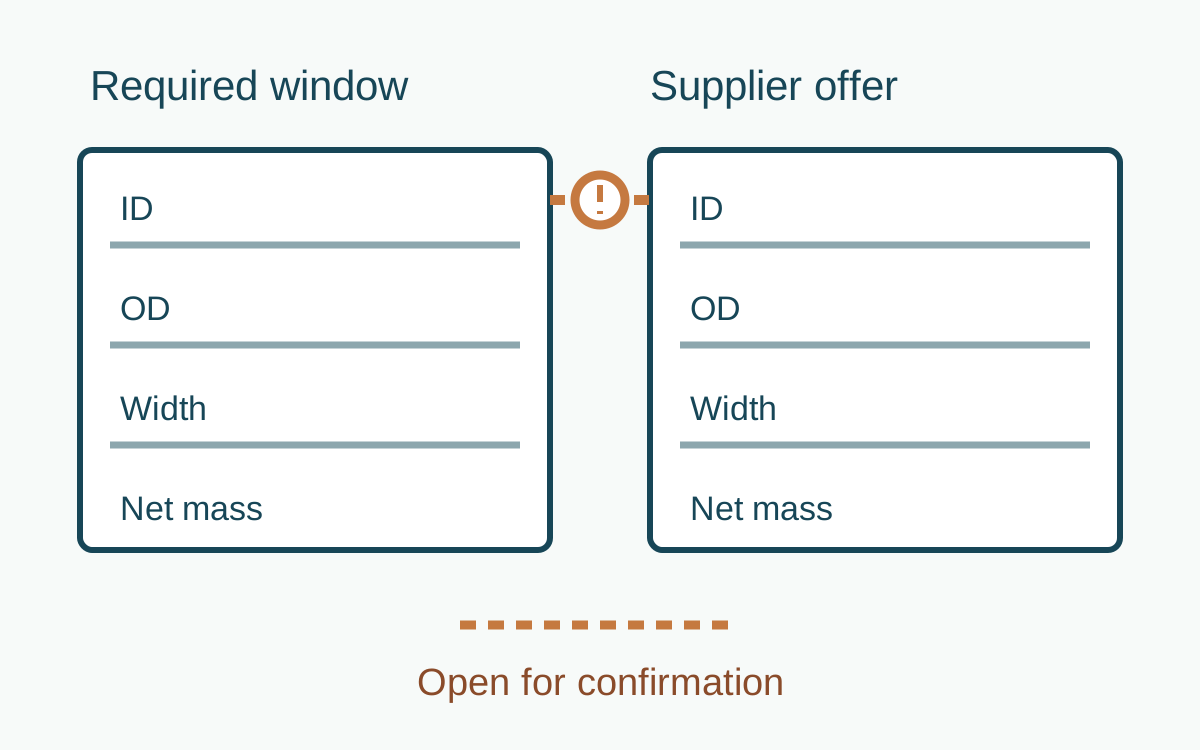
6. Release one confirmed revision
Close each difference with the accepted value or range, unit, conditions, responsible confirmation and revision reference. Require the supplier to acknowledge the final per-coil window, including any agreed exceptions. A response such as “standard coils” or “as usual” leaves the detailed limits unconfirmed.
Give purchasing, supplier production and receiving the same released revision. Link it to the order and material identification so the receiving team can compare the delivered information with the agreed fields. If an exception remains unresolved, state that explicitly and identify who must decide it before release. Do not mark a proposed arrangement as approved just because a price and delivery date have been agreed.